
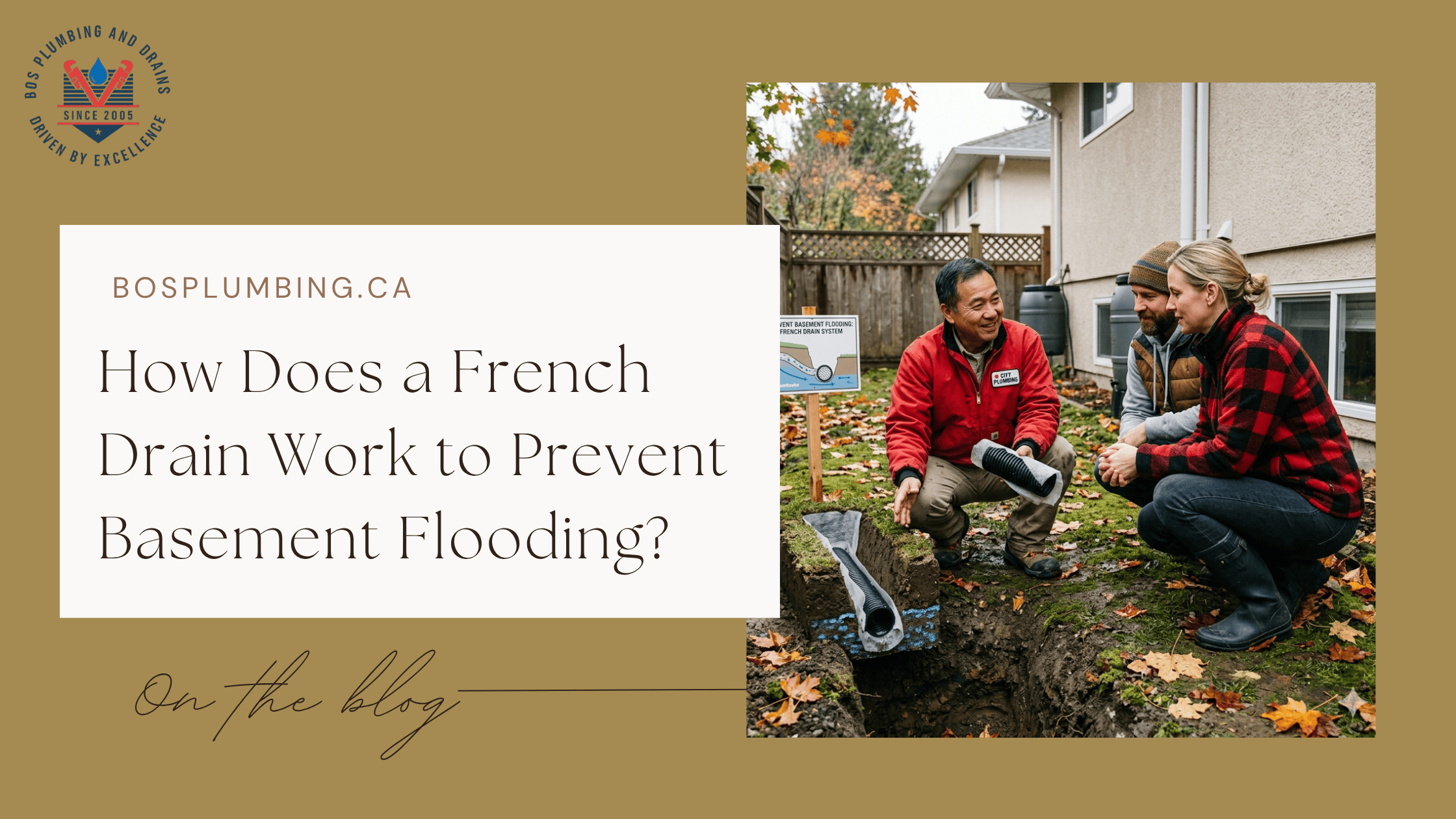
When you have ever come down the stairs after a good Ontario rain, or a spring thaw, and discovered a puddle growing over the floor of your basement, you are not alone. One of the most stressful and most expensive issues that Canadian homeowners have to deal with and that occurs more frequently than many people may think is basement flooding. The good news? An adequately installed french drain system can prevent water even before it can reach your foundation.
In this guide we will describe the specifics of how a french drain is installed, the available types, installation requirements and when you need to call a reputable plumbing service to secure your home.
What Is a French Drain?
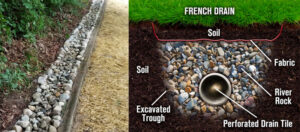
A french drain also known as a french trench drain, french ditch drain or weeping tile is a very simple yet very efficient house drainage system. It is a trench full of gravel or crushed stones, with a holey pipe that gathers unwanted ground water and diverts it away to a safe distance, other than the foundation of your home.
The drainage system was named after inventor Henry French of the 19th century, and is now customary in the majority of new homes in Canada. It is even needed by many municipalities. Unless your older home has it, you may be in grave danger of having your basement flooding particularly here in the GTA where spring melting and summer downpours exert tremendous pressure on foundations.
How Does a French Drain Actually Work?
This is simple, water takes the line of least resistance. A french drain system is a pathway that allows water to flow freely through easily, engineered away from your home.
Here’s what happens step by step:
- Rainwater or snowmelt saturates the soil around your foundation.
- This creates hydrostatic pressure water pushing against your basement walls and floor.
- The gravel-filled trench intercepts that water before pressure builds.
- The french drain pipes (perforated PVC or corrugated plastic) collect the water.
- Water flows downhill through the pipe to a safe discharge point a storm drain, dry well, or municipal system.
- If gravity alone isn’t enough, a sump pump install is added to actively eject the collected water.
The gravel has a natural filtering effect, which allows the free flow of water without the soil and particles of the pipe. The outcome: no accumulation of water, no hydrostatic pressure, and no basement flooding.
Interior vs. Exterior French Drain Which One Do You Need?
Exterior French Drain
A french drain perimeter is placed around the house at the foundation level and is placed outside the foundation walls. It views your home even before it is touched by water. It is the best ever when it comes to new constructions and significant renovations, whereas retrofitting involves considerable excavation.
Interior French Drain
A french drain system is placed under the basement floor, and encircles the interior perimeter. It gathers water that is already into the foundation and directs it to a sump pit. In this method, the concrete floor is broken up using a jackhammer and this is why this method of french drain installation should never be done by DIY, but as a licensed professional.
Does a French Drain Work Alone?
- Sump pump:
A replace sump pump or new sump pump install pairs perfectly with interior drainage, actively pumping water out of your basement. - Backwater valve:
A backwater valve install (also called a backflow valve basement or sewer backup valve) prevents municipal sewer water from backing up into your home during heavy storms, a real risk in aging GTA infrastructure. - Proper grading and gutters:
Directing surface water away from the foundation reduces the load on your drainage system.
In case you have already had the experience of basement flooding repair requirements or emergency basement flooding, installing a backflow valve sewer and a sump system in addition to your french drain will provide you with an added layer of protection.
Why French Drains Prevent Basement Flooding
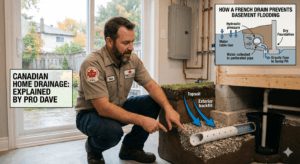
Hydrostatic pressure is the primary cause of homes to basement flooding. This occurs whereby water accumulates in the soil and exerts pressure on your foundation walls.
A french drain system alleviates this pressure by providing water with a regulated course outside your house.
Key benefits include:
- Prevents cracks and leaks in foundation walls
- Reduces need for frequent basement flooding repair
- Protects against mold and moisture damage
- Works alongside sump pumps for better protection
It’s one of the most reliable ways to avoid costly repairs.
Why Your GTA Home Might Be at Risk
Heavy clay soil is common in the geography of Southern Canada especially in regions such as Oakville and Hamilton. Clay doesn’t absorb water quickly. As the snow melts, the water lies on the surface of the soil, and it is close to your house.
Unless you have a good french drain (around the house), you are solely depending on the waterproofing of your foundation- which is not going to last. A lot of homeowners would be searching for sewer line repair near me or plumbing repair following a major storm and realize that it was not a perimeter drainage issue, but rather a lack of proper drainage.
The Cost of Prevention vs. The Cost of Disaster
The french drain cost is a question that is frequently asked. Although the french drain installation cost may vary with the length of the trench and the depth of the excavation, it is much cheaper than the other one.
One event of emergency basement flooding may result in tens of thousands of dollars of damage. Basement flood clean up up to sewage cleanup in basement, the costs are increasing at a very rapid rate. A french drain is a french drain insurance purchase.
French Drain Installation: What to Expect
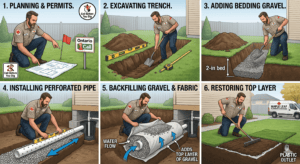
One of the critical measures to have in place to prevent basement flooding is a proper french drain installation, which is of importance in Canadian climates where the heavy rain and melting snow will put pressure on water at the foundation of your home. It is not merely trench excavation, but a well-laid-out procedure meant to take water safely off your house.
How Does the French Drain Installation Process Work?
Professionals follow a step-by-step approach to build an effective french drain system:
- Site inspection to assess soil, slope, and house drainage system
- Marking the path for french drain around house
- Digging a trench with proper grading for water flow
- Adding gravel base for filtration
- Installing perforated french drain pipes
- Covering with filter fabric and more gravel
- Backfilling soil and restoring landscaping
Proper slope and material quality are critical. Poor installation can lead to recurring issues like unclogging drain or costly drain repairs.
When Should You Install a French Drain?
You may need a french drain if you notice:
- Water pooling near foundation
- Damp basement or musty smells
- Frequent shower drain clogged problems
- Repeated need for plumbing repair
Early installation helps prevent emergency basement flooding and expensive basement flood clean up.
Do I Need a French Drain? Signs to Watch For
You may need a french drain system or basement flooding repair if you notice any of the following around your GTA home:
- Water stains, efflorescence (white powdery residue), or mould on basement walls
- Musty odour in the basement, especially after rain
- Standing water or soggy areas in your yard that don’t drain
- Visible cracks in your foundation walls
- Recurring sewage cleanup in basement situations after storms
- Your sump pump running constantly or failing time to replace sump pump
If you’ve searched for plumbers near me or local emergency plumbers after a flood, don’t wait for the next one. Get ahead of it now.
Can I Install a French Drain Myself?
Although exterior surface drains might appear to be easy to manage, interior french drain installation can never be a do-it-yourself project. It entails the demolition of your concrete floor, labor around your foundation, drain repairs and possibly the connection with the parts of the plumbing system. Even a single error has the potential to cause expensive foundation damage, broken pipes or improper drainage, which will in fact increase the severity of flooding. The plumbing service that you contract should be licensed and have previous experience in basement waterproofing.
Why Choose BOS Plumbing and Drains?
When it comes to ensuring the most valuable thing, there is nothing like experience. BOS Plumbing and Drains comes with more than 20 years of experience to assist homeowners to overcome the distinct demands of climate in Ontario.
We are not just some cheap plumbers near me, but a committed plumbing company that is aware of the local terrain. We offer complete plumbing service and drain repair, whether it be in Mississauga, Oakville, Hamilton, Milton, or Niagara.
Our team specializes in:
- Professional french drain installation.
- Sump pump installation cost estimates and high-quality replacements.
- Installing a backflow valve sewer system to prevent nasty backups.
- Sewage repair and septic pump repair.
- 24/7 local emergency plumber services for when the “Big Thaw” hits.
On a Tuesday, when the shower drain clogged, to a broken pipe emergency on a holiday, we are your plumbers close to me who really come.
Final Thoughts on Basement Safety
A french drain is a plumbing system of your house that works and works without making any noise. You may prevent the nightmare of basement flooding and health hazards of mold and dampness by diversion of water even before it actually touches your foundation.
Waiting until the next downpour to discover that your drainage system is inadequate is not a good idea. You need a toilet replacement, or a full-fledged french drain system, our professionals are at your service.