Basement flooding is one of the most common and costly plumbing problems homeowners face across Canada. Heavy rainfall, aging sewer infrastructure, and rapid urban development often put pressure on municipal sewer systems. When the system becomes overloaded, wastewater
This is where backwater valves play an essential role.
These products are used to defend houses by preventing sewage flow back to the basement via a floor drain or a toilet.
Nevertheless, it is not enough to install a valve.
It is a component of the residential plumbing system of a home like any other part of the plumbing system, it needs maintenance.
Some valve that is not taken care of might just break at the time when the situation requires it the most.
Through this guide, the author has covered the backwater valve maintenance checklist that every Canadian homeowner needs to adhere to to ensure that the property is not affected by the expensive sewer backup.
What Is a Backwater Valve?
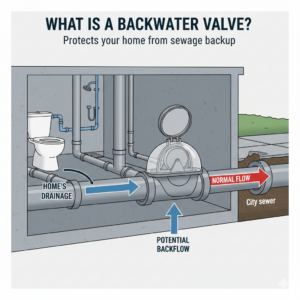
A backwater valve refers to a safety measure that is installed in your sewage.
Its task is very straightforward but of high importance: it enables the wastewater to go out of the house and does not permit sewage to go back in.
Wastewater can be sent in reverse when sewer systems of municipalities become overloaded because of storms or obstructions.
This sewage could find its way in your basement through drain pipes without a valve.
Well performing backwater valves for sewer systems are automatic and close when back flow pressure is observed.
This will avoid the entry of polluted water into the house.
The use of these valves has been encouraged by most of the municipalities in Ontario, like City of Mississauga, Oakville, Hamilton and Niagara, to secure residential properties.
Why Backwater Valve Maintenance Matters
Installing backwater valve is a clever move towards flood prevention and it is maintenance that makes them dependable.
With time, there is a possibility of the deposition of debris, grease and sediment in the valve.
In case of the impossibility of the proper closing of the valve flap, the sewage might still get into the home.
Regular maintenance provides several benefits:
- Prevents basement flooding caused by sewer backups
- Extends the lifespan of your plumbing system
- Reduces the need for costly Plumbing Repair services
- Keeps the backflow valve sewer system operating correctly
- Helps homeowners avoid emergency plumbing situations
For homeowners in older neighborhoods, maintenance becomes even more important because aging sewer systems are more prone to backup issues.
Backwater Valve Quick Maintenance Checklist
- Keep the valve access cover visible and easy to reach
- Clean debris, grease, and dirt from the valve chamber regularly
- Ensure the valve flap opens and closes smoothly
- Watch for slow drains, gurgling sounds, or sewer odors
- Inspect for blockages in the sewer line
- Avoid pouring grease, oils, wipes, or solids down drains
- Check the valve after heavy rain or storms
- Avoid covering the valve during basement renovations
- Perform visual inspections periodically
- Schedule a professional inspection once a year
Backwater Valve Maintenance Checklist for Homeowners
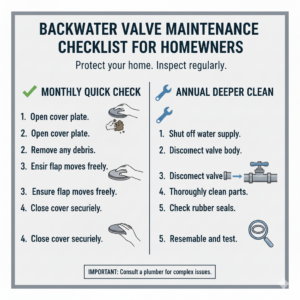
Homeowners can follow this simple checklist to ensure their valve stays in good condition.
1. Locate the Valve Access Cover
The majority of backwater valve sewer systems of sewage systems have an access cover within the basement floor.
The access point can be a little larger or a little smaller depending on the type of backwater valve installed in your home.
Always ensure that the cover is always easy to access.
Make sure not to place furniture, flooring, or storage over it.
Inspection and cleaning are much easier by seizing the opportunity easily.
2. Clean Debris from the Valve
Dirt, grease, residue in soap and small particles may be accumulated in the valve chamber over time.
When there is an accumulation of debris around the mechanism, this can even result in the inability of the valve to close.
The cleaning is done on a regular basis to maintain the performance of the both backwater valve types as well as other back flow valves that are utilized in residential sewer protection systems.
Cautiously wipe off the cover and scrape off any debris.
This guarantees that the valve flap has free movement.
Do not use other harsh chemicals that may destroy the valve parts.
3. Check the Valve Flap Movement
The flap on the inside of the sewage back flow valve should be able to open and close without any problems.
In the event of a sewer overflow, wastewater can leak into the house in case the flap becomes stuck or does not close fully.
A rapid check will make the mechanism operational.
4. Inspect for Blockages in the Sewer Line
Unnecessary pressure on the valve may be created by a blocked sewer line.
The symptoms to watch out for include slow drains, or odd sounds in the pipes.
Such symptoms suggest the accumulation in the sewage line.
Clearing out drains is a way of preserving the cascading plumbing system.
5. Test the Valve Periodically
Even though the sewer backflow condition cannot be completely simulated by homeowners, periodic visual inspection can be used to detect the possible problems in time.
When the valve seems to be damaged or worn, it can be necessary to make a professional service.
6. Avoid Pouring Grease or Waste Down Drains
The most frequent causes of sewage blockage are kitchen grease, oils, wipers and hygiene products.
These substances may be deposited within the backflow valve sewer mechanism and cannot work.
Open drain strainers and place grease in containers rather than sinks.
7. Schedule Professional Inspection
It is advisable to have the valve checked by a skilled plumber after every one year despite the regular homeowner maintenance.
Professional checks make sure that the valve, sewer line, and other aspects of the residential plumbing system are in proper condition.
Signs Your Backwater Valve Needs Maintenance
A backwater valve helps keep your house safe against sewer overflow, however, such as any other component of your plumbing system it needs frequent inspection and maintenance.
Due to entropy, rubbish, and silt may start building up in the valve chamber so that the valve can no longer close effectively when backflow sets in.
In the event that the valve gets blocked or damaged, it will not work in case of heavy rains, or when the municipal sewer system is overloaded.
Early detection of warning signs helps the homeowners to act before a small problem escalates into an expensive
plumbing repair or flood in the basement.
Here are some common signs that your backwater valves may need maintenance:
- Slow draining sinks or bathtubs
- Gurgling sounds coming from drains
- Unpleasant sewer odors in the basement
- Water backing up through floor drains
- Frequent drain clogs throughout the house
If you notice any of these issues, the backwater valve sewer system may need cleaning or repair.
How Often Should Backwater Valves Be Maintained?
A majority of plumbing professionals advise that it is important to check and clean the backwater valves at least once or twice a year.
The periodic maintenance will make sure that the valve is able to close correctly in the case of sewer backflow which would save your basement and expensive damages.
Home owners should also conduct the fast physical examinations following intense rain or snow melts.
Municipal sewer systems can be overloaded in most cities in Canada during these times, and the probability of sewage overflowing into homesteads is high.
The preservation of the backwater valve sewer mechanism by keeping it clean and debris-free would be a good step towards making the device work correctly at the moment when it is most required.
Recommended maintenance schedule includes:
- Spring inspection – Check the valve after winter when snowmelt increases pressure on sewer systems.
- Fall inspection – Inspect and clean the valve before seasonal storms and heavy rainfall.
- After major storms – Make sure the valve flap moves freely and no debris is blocking the chamber.
Although homeowners are capable of performing simple inspections, having a professional check after a year is very advisable.
The professional workers of BOS Plumbing and Drains are able to check the valve, clear the accumulation, and make sure that the whole plumbing system works as intended.
If you live in Ontario, the team at BOS Plumbing provides expert Plumbing Repair and maintenance services across multiple areas including Mississauga, Oakville, Hamilton, Milton, and Niagara.
Whether you are in need of an after-care service or you may have immediate need of a 24 hour plumber, the professional assistance will keep your backwater valve in the right shape and keep your home safe against sewer overflows.
Backwater Valve Installation Cost in Canada
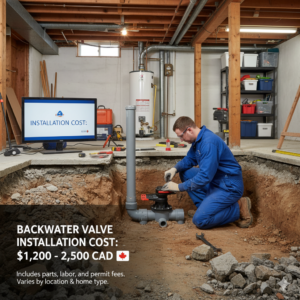
The installation of a backwater valve is a significant measure of prevention of sewer backups and basement flooding of your home.
In Canada, the backwater valve installation cost typically ranges from $1,800 to $4,000, depending on the complexity of the job and the layout of your home’s plumbing system.
A large number of homeowners also call this process installing backflow valve protection, as the aim is to prevent the return of wastewater in the house in case of sewer overload.
The valve and labor, cutting the basement floor to reach the sewer pipe, installation as well as the restoration of the concrete are normally added to the total cost.
The more accessible the sewer line is to the homes, the cheaper the installation.
Factors that affect installation cost include:
- Accessibility of the main sewer line
- Type of backwater valve being installed
- Age and condition of the existing plumbing system
- Permit and inspection requirements in your city
- Basement floor repair after installation
In Ontario, rebate programs are also provided by some municipalities, and these programs assist homeowners to install backwater valves at a reduced cost in the name of flood prevention programs.
To be installed reliably, the homeowners may also address BOS Plumbing and Drains, which offers services of a professional plumber in the areas of Oakville, Hamilton, Mississauga, Milton, Niagara – which has licensed certified plumber team and transparent price offer.
With appropriate installation, your residential plumbing system is guarded against backed-up sewerage and the expensive harm of water.
When Should You Call a Professional Plumber?
Some of the problems involving backwater valves fall under the professional care of the homeowners because basic cleaning and visual check-ups are insufficient.
In case the valve gets blocked, damaged or it no longer serves its purpose, then a trained plumber is required to examine the system to avoid the severe cases of sewer backups.
You should consider calling a professional plumber if you notice the following signs:
- Water backing up in basement drains during heavy rain
- Strong sewer odors coming from the basement or floor drains
- Frequent clogs in sinks, toilets, or drains throughout the house
- Gurgling sounds coming from pipes or fixtures
- Slow drainage in multiple fixtures at the same time
These are warning signs that could mean that there is a problem in the backwater valve sewer line or in some other section of your plumbing system.
Early prevention is likely to prevent costly plumbing repair work and save your home against floods.
In case of any trustworthy installation, the homeowners may refer to BOS Plumbing and Drains is a reputable plumbing company that works with the homeowners in the GTA.
They offer quality solutions to various plumbing tasks of the house with qualified technicians and advanced equipment.
Their services are backwater valve installation and maintenance, drain cleaning, sewer line repair, sump pump services, water heater installation and repair, leak detection, pipe repair, fixture installation, and general plumbing repair.
They also have rapid emergency plumbing service on urgent issues such as sewer backup, burst pipes and flooding of basements and assist the home owners to maintain their plumbing systems safe and flowing well.
Final Thoughts
Sewer overflowing may severely affect your house and this is mainly experienced in places where there is a lot of rainfall and also in places with deteriorating infrastructure.
One of the best methods of keeping your basement and your plumbing system intact is by keeping the backwater valves effective.
With the help of a basic list of maintenance and regular professional inspection, Canadian homeowners can avoid spending a lot of money on a leak and keep their homes safe all year round.
When you observe red flags like slow drains, sewer odors or water retention, then it is time to make a professional plumbing repair visit to make sure that your system is functioning properly.