
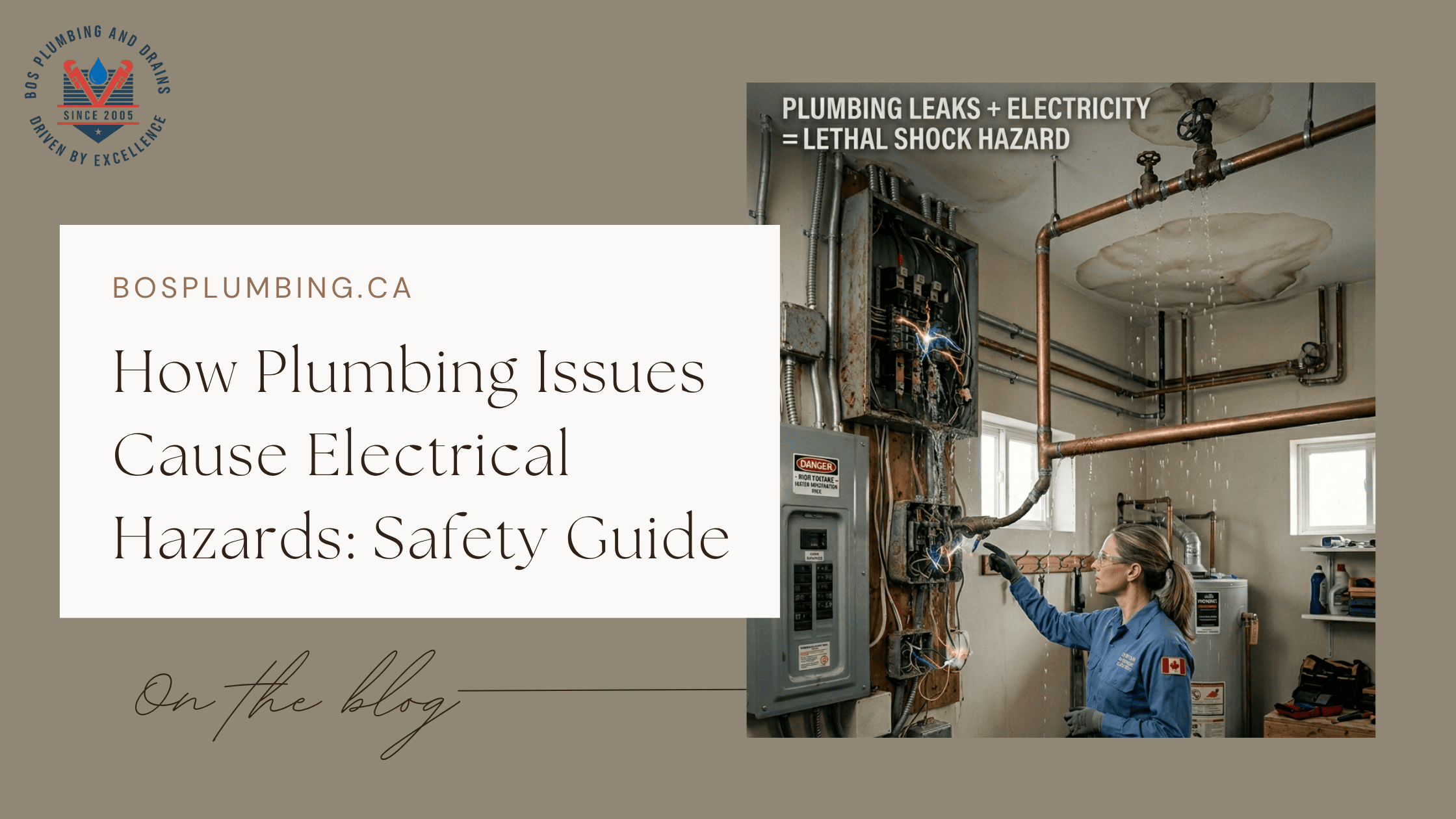
As Canadians, we take great pride in our homes. It may be an old, century-old Victorian in Toronto, or a new semi-detached in Calgary, we will spend much of our time in the maintenance of our sanctuaries, getting them warm and dry. Nevertheless, a lot of homeowners perceive the plumbing system and their electrical grid as two entirely different entities.
The reality is that they are more friends than roomies who do not necessarily get along. As plumbing issues occur, they do not remain in the pipes. Water is a very good conductor of electricity and when a leakage encounters a wire, the consequences can be disastrous. The first step to making sure that your family is safe is to understand how these two systems interact.
Why Plumbing Problems Lead to Electrical Hazards
Electrical wiring and plumbing systems to your home are usually installed in shared structural spaces behind walls, underneath floors and ceilings. Water will not remain in place when a plumbing problem arises. It travels.
Over time, this moisture can reach:
- Electrical wires and junction boxes
- Power outlets and switches
- Breaker panels and appliances
Slow leakage may form some conductive pathways, thereby raising the chances of short-circuiting and getting an electric shock. This is why; proactive plumbing repair is not only so as to fix the water but to guard your complete domestic system.
The Dangerous Intersection of Water and Wires
You should get to know the conductivity to be able to tell the danger. Although pure H2O is a good insulator the water in Southern Ontario is highly enriched with minerals such as calcium and magnesium. These have been the minerals which enable easy flow of electricity through water.
The metal water pipes in the GTA homes are used as ground in the electrical system in most houses. In case of a damaged pipe e.g. broken pipes or in extreme cases having serious corrosion, there will no longer be a safe passage of electricity to the earth. Rather, the electrical power could be used to make the water and the metalites active. That is why, when you touch the handle of a kitchen faucet or shower, you may experience some minor tingling sensation. It is no small glitch, it is like the plumbing is carrying live.
4 Critical Ways Plumbing Issues Create Electrical Hazards
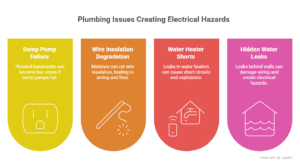
1. Sump Pump Failure and “Hot” Standing Water
The spring thaw is likely to cause floods into basements in such cities as Oakville and Milton. Most common causes of basement “energization” are sump pump issues. Should one of the pumps malfunction, and the water is raised to the level of the baseboard outlets or the furnace bottom, the entire pool of water may be a live zone. This is why the sump pump repair is a very sensitive safety issue. Always make sure that the main breaker is off before stepping into a flooded basement.
Common problems include:
- Pump failure during storms
- Power outages affecting operation
- Improper installation or maintenance
Flooding may cause instant electrical dangers since electrical panels are usually in basements. Regular check needs to be made in order to ensure protection by scheduling sump pump repair and installation of backup systems.
2. The Slow Degradation of Wire Insulation
A drip of clogging drainage or a loose joint can follow a wire meters long, but slowly and unnoticed. Continuous moisture leads to rotting and brittleness of the protective plastic insulation of wires. This results in arcing between wires where electricity jumps. Arcing produces temperatures in excess of 500°C, and wooden studs or insulation readily ignite. The only measure that can be taken to prevent these concealed fire hazards is fixing water leaks immediately.
High-risk situations include:
- Basement flooding from blocked floor drains in basement
- Kitchen sink overflows near electrical appliances
- Bathroom water pooling near switches and outlets
Routine drain cleaning and maintenance from a professional plumbing service can prevent these hazards.
3. Internal Shorts in Water Heaters
The water heaters problems are also especially dangerous since such devices usually demand 240 volts of power. Water may spill into the electrical housing in case of a leak in the inner tank or failure of the gasket on the heating element. This may result in an instant short circuit which may blow the main breaker or in the worst scenario, it may result in an electrical explosion inside the unit. To ensure that these leaks are caused by rust and scale, regular water heaters maintenance is necessary.
Common water heater problems include:
- Tank corrosion leading to leaks
- Loose or faulty electrical connections
- Sediment buildup affecting performance
In the absence of appropriate water heaters maintenance, these problems may lead to electrical shocks or even fire hazards. Periodic check-ups will keep your system operating safely and efficiently.
4. Hidden Water Leaks Behind Walls
Water is indolent; it takes the direction of the easiest way. That route is an electrical conduit very often. When there is a leakage on the second floor, it would cascade down the exterior of a pipe and drop onto one of the ceiling fans or light fixtures of the first floor. When you find some water dripping out of a light, do not switch. Immediately call a 24 hour plumber and an electrician.
Residential plumbing systems have the most ignored plumbing issues which include hidden leaks. They can begin with a small crack, loose fittings, or seals that are in a bad condition. They can be unnoticed within weeks or months since they are not visible. In the process, the moisture disperses via insulation, drywall and ultimately to electrical wiring.
Long-term effects include:
- Wire corrosion and reduced conductivity
- Mold growth affecting indoor air quality
- Structural damage to walls and ceilings
Professional leak detection and timely fixing water leaks can prevent both structural and electrical damage.
The Regional Hard Water Factor
Hard water is a challenge all over the areas of Mississauga, Hamilton and Niagara. The presence of a lot of minerals results in a phenomenon known as scale that causes your pipes to become narrower in diameter and raises the pressure inside the pipes. This pressure results in pinhole leaks in the most inconvenient locations- usually next to electrical junction boxes. Also, the water softener issues may cause highly conductive leaks of brine, which are much more hazardous than fresh water ones when in contact with electricity.
If this moisture spreads near electrical systems, it increases the risk of:
- Electrical corrosion
- Short circuits
- Appliance damage
Regular servicing by a
professional plumbing company
ensures your system remains safe and efficient.
High-Risk Areas Where Plumbing Meets Electricity
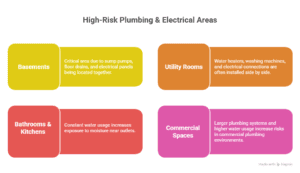
Certain areas in your home are naturally more vulnerable to electrical hazards caused by plumbing problems:
- Basements: The most critical area due to sump pumps, floor drains, and electrical panels being located together
- Utility Rooms: Water heaters, washing machines, and electrical connections are often installed side by side
- Bathrooms & Kitchens: Constant water usage increases exposure to moisture near outlets
- Commercial Spaces: Larger plumbing systems and higher water usage increase risks in commercial plumbing environments
Understanding these high-risk zones allows homeowners to take preventive action.
Commercial vs. Residential Risks
Risk varies with the type of property. Systems used in commercial plumbing are higher pressure and are frequently close to high-voltage industrial equipment. The bursting of a pipe in a factory or restaurant does not only lead to a mess, it also poses a huge dilemma of electrocution to the employees.
The dangers are more individual in residential plumbing. The most frequent cause of accidents is DIY Plumbing Repair. Most house owners strive to solder a pipe without knowing that there is a live wire around and accidentally come into contact with it and become badly injured. To maintain repairs around electrical structures, one should always leave this to a licensed plumbing company in Mississauga.
Warning Signs of Plumbing-Related Electrical Hazards
Early detection is key. Many plumbing problems show warning signs before becoming dangerous electrical hazards.
Watch for:
- Flickering or dimming lights when using water fixtures
- Damp walls, ceilings, or flooring
- Burning or unusual smells near outlets
- Buzzing sounds from electrical panels
- Frequent breaker trips or power fluctuations
Ignoring these signs can lead to severe damage. Immediate inspection by local plumbers is recommended.
10 Plumbing Safety Tips to Prevent Electrical Hazards
Taking preventive steps can significantly reduce risks:
- Have plumbing systems periodically checked.
- Seal any leaks as they appear, to prevent the spread of moisture.
- Clean and keep floor drains in the basement clean.
- Do regular water heater repairs.
- Install sump pump backup batteries.
- Maintain electric sockets high in flood prone places.
- Basements – use moisture resistant materials.
- Get licensed local plumbers to do any repairs.
- Install new piping and wiring systems.
- Call a 24 hour plumber in case of an emergency.
These steps are essential for both residential plumbing and commercial plumbing safety.
When Should You Call a Professional Plumber?
Not all plumbing issues can be handled with DIY solutions. Others demand urgent attention from professionals to avoid any electrical hazards.
Call a plumbing company if you notice:
- Sudden pipe bursts or leaks
- Persistent drainage problems
- Water pooling near electrical systems
- Unusual noises or smells from plumbing fixtures
- Basement flooding or sump pump failure
Searching for plumbers close to me can help in emergencies, but choosing experienced professionals ensures proper diagnosis and repair.
Looking up plumbers close to me may be useful in emergencies, but when it comes to diagnosis and repair, the best choice is to hire professionals.
Why Homeowners Trust BOS Plumbing and Drains
Experience and knowledge are important when it comes to avoiding the plumbing issues that cause electrical accidents.
BOS Plumbing and Drains – a trusted plumbing company in the city of Mississauga since 2005 have established a good reputation of providing trustworthy and professional plumbing service in both residential and commercial buildings.
Why choose BOS:
- Over 20 years of industry experience
- Skilled, licensed, and insured technicians
- Advanced tools for leak detection and diagnostics
- Fast response for emergency plumbing situations
- Long-term solutions, not temporary fixes
From plumbing repair to sump pump issues and drainage problems, BOS ensures your plumbing system operates safely and efficiently.
Professional Solutions for a Safer Home
Water and electricity do not mix and should not be left to amateurs no matter what you are fixing, be it a faulty water heater or an unyielding basement. Our plumbing service and diagnostic care will be offered by our professional team and will keep your house a safe haven.
When you are suspicious about some kind of leakage in the area of your electrical panel or when you start feeling the tingling in your tap, you require a plumbing company in Mississauga that would understand the seriousness of the issue. Find plumbers close to me or dial our emergency plumber near me now.
FAQs
1. Can plumbing problems cause electrical hazards?
Yes, water exposure from leaks or flooding can damage wiring and create serious electrical hazards, including shock and fire risks.
2. What should I do if water reaches an electrical outlet?
Immediately turn off the main power supply and contact both a plumber and electrician for inspection and repair.
3. Are sump pumps dangerous if they fail?
Yes, sump pump issues can lead to basement flooding, which increases the risk of electrical hazards.
4. How often should I inspect my plumbing system?
At least once a year, and before winter, to prevent freeze-related plumbing issues.
5. Do water heater problems lead to electrical risks?
Yes, especially if there are leaks or faulty wiring connections within the unit.
6. How can I protect my home from these hazards?
Ensure your home has GFCI (Ground Fault Circuit Interrupter) outlets in all bathrooms, kitchens, and basements. Additionally, schedule an annual inspection of your plumbing system to catch leaks before they reach your wiring.