1. What are the most common plumbing issues in homes?
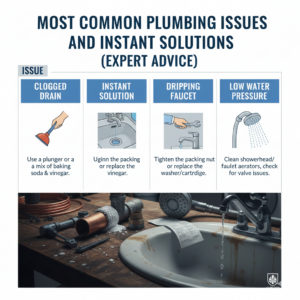
Common plumbing problems include clogged drains, leaking faucets, running toilets, low water pressure, and water heater issues. These problems often happen due to worn-out parts, mineral buildup, or blocked pipes. Addressing them early helps prevent costly repairs and water damage.
2. Why is my home water pressure suddenly low?
Low water pressure is often caused by clogged aerators, mineral buildup in pipes, hidden leaks, or partially closed shut-off valves. If the pressure drop affects the whole house, the issue may be related to the main water supply line.
3. How can I detect hidden plumbing leaks at home?
Signs of hidden leaks include unusually high water bills, damp walls or ceilings, mold growth, musty smells, or water stains. In some cases, you may also notice reduced water pressure. Professional plumbers use leak detection equipment to find the exact location without damaging walls or floors.
4. How often should residential plumbing be inspected?
Most plumbing experts recommend a professional inspection once a year. Regular inspections help detect small leaks, corrosion, and drainage issues before they turn into major plumbing problems.
5. Why are my pipes making banging noises?
Banging pipes are often caused by a pressure issue known as a water hammer. This occurs when water flow suddenly stops, creating a shockwave inside the pipes.
6. Why does my faucet keep dripping?
A dripping faucet is usually caused by a worn washer, damaged cartridge, or faulty valve seat inside the fixture.
7. Why does my tap water look cloudy?
Cloudy water is usually caused by tiny air bubbles trapped in the water supply. The bubbles typically disappear after a few seconds.
8. Why does my bathroom smell like sewage?
Sewer odors often occur when the water inside the P-trap evaporates or when there is a problem with the plumbing vent system.
9. What causes drains to clog frequently?
Frequent drain clogs are usually caused by grease buildup, soap residue, hair, food waste, or foreign objects entering the pipes. Over time, these materials accumulate and restrict water flow.
10. How do I fix a slow draining sink?
You can try flushing the drain with hot water or using a plunger to remove minor clogs. If the sink continues draining slowly, the blockage may be deeper in the pipe and require professional drain cleaning.
11. Are chemical drain cleaners safe for pipes?
Chemical drain cleaners can damage pipes, especially older plumbing systems. Frequent use may weaken pipe materials and cause leaks.
12. Why does my sink drain slowly?
Slow drains usually occur due to buildup of grease, soap residue, hair, or food debris inside the pipe.
13. Why do my drains make gurgling sounds?
Gurgling sounds usually indicate air trapped in the plumbing system due to a partial blockage or a venting issue.
14. What causes recurring drain clogs?
Recurring clogs often indicate a deeper blockage in the drain line caused by grease buildup, debris accumulation, or tree root intrusion.
15. How do plumbers clear stubborn drain clogs?
Plumbers use specialized tools such as drain snakes, augers, and hydro jetting equipment to remove severe blockages and restore proper water flow.
16. What is drain snaking?
Drain snaking is a plumbing method that uses a flexible cable with a rotating head to break apart clogs inside pipes.
17. When should I call a plumber for drain snaking?
If plunging or home remedies fail to clear the clog, professional drain snaking may be required to remove deeper blockages.
18. What is hydro jetting in plumbing?
Hydro jetting is a drain cleaning method that uses high-pressure water to remove grease, sludge, mineral buildup, and debris from inside pipes. It thoroughly cleans pipe walls and restores normal water flow.
19. Is hydro jetting safe for plumbing pipes?
Hydro jetting is safe for most modern plumbing systems when performed by professionals. Before using the equipment, plumbers usually inspect the pipes to ensure they can handle the pressure.
20. When should hydro jetting be used?
Hydro jetting is recommended for severe blockages, grease buildup, or when traditional drain snaking cannot completely clear the pipes.
21. Can hydro jetting remove tree roots?
Hydro jetting can break apart smaller tree roots and clear debris from sewer lines. However, severely damaged pipes may still require repair or replacement.
22. What are signs of a main drain problem?
Common signs include multiple drains clogging at once, sewage odors, gurgling sounds in pipes, and water backing up into sinks or tubs.
23. Why are multiple drains clogged at the same time?
When several drains clog simultaneously, the problem is usually located in the main sewer line rather than individual fixtures.
24. What causes sewer line blockages?
Sewer line blockages are commonly caused by tree roots, grease buildup, debris accumulation, or damaged pipes.
25. How do plumbers detect sewer line problems?
Plumbers often use sewer camera inspections to identify cracks, root intrusion, or blockages inside underground pipes.
26. Why do homes need sump pumps?
Sump pumps remove excess groundwater from basements and crawl spaces, helping prevent flooding and water damage during heavy rain or snowmelt.
27. How long does a sump pump last?
Most sump pumps last between 7 and 10 years with proper maintenance.
28. Why is my sump pump running constantly?
A sump pump may run continuously due to heavy rainfall, high groundwater levels, or a stuck float switch.
29. What happens if a sump pump fails?
If a sump pump stops working, water can accumulate in the basement and cause flooding, mold growth, and structural damage.
30. What is a sewage pump?
A sewage pump moves wastewater from lower levels of a home to the main sewer line when gravity drainage is not possible.
31. Why is my sewage pump not working?
Power failure, clogged impellers, or mechanical wear are common reasons sewage pumps stop working.
32. What is a backwater valve?
A backwater valve prevents sewage from flowing back into your home during sewer backups.
33. Do homes need backwater valves?
Homes with basements benefit from backwater valves because they help prevent sewer flooding during heavy rainfall.
34. How often should backwater valves be cleaned?
Backwater valves should be inspected and cleaned at least once a year.
35. What is a French drain system?
A French drain is a gravel-filled trench with a perforated pipe that redirects groundwater away from foundations.
36. How do I know if I need a French drain?
Frequent basement moisture, water pooling around the foundation, or poor yard drainage may indicate the need for a French drain.
37. Why is my water heater not producing hot water?
Possible causes include thermostat problems, heating element failure, pilot light issues, or sediment buildup inside the tank.
38. How long do water heaters last?
Traditional tank water heaters usually last 8–12 years, while tankless systems can last up to 20 years with proper maintenance.
39. Why does my water heater make rumbling noises?
Rumbling noises usually occur when sediment collects at the bottom of the tank and interferes with the heating process.
40. Why does my hot water run out quickly?
This may happen if the water heater tank is too small, sediment buildup reduces capacity, or the heating element is failing.
41. Why is my hot water discolored?
Discolored hot water often indicates rust or sediment buildup inside the water heater tank.
42. What are signs of hard water in a home?
Common signs include white mineral buildup on faucets, soap not lathering well, dry skin, and spots on dishes after washing.
43. How long do water softeners last?
Most water softeners last between 10 and 15 years depending on water quality and maintenance.
44. Why is my water softener using too much salt?
Incorrect settings or frequent regeneration cycles can increase salt usage.
45. Why does my water softener keep running?
A stuck valve, faulty timer, or regeneration issue can cause continuous operation.
46. What qualifies as a plumbing emergency?
Burst pipes, sewage backups, major leaks, and basement flooding are considered plumbing emergencies because they can cause serious property damage.
47. What should I do if a pipe bursts?
Turn off the main water supply immediately and contact an emergency plumber to prevent severe water damage.
48. What should I do if my toilet overflows?
Turn off the toilet’s water supply valve and avoid flushing again until the blockage is cleared.
49. What should I do if my basement starts flooding?
Turn off the main water supply and electricity if necessary, then contact an emergency plumber immediately.
50. What causes pipes to burst in winter?
Pipes burst when water inside them freezes and expands, creating extreme pressure.
51. Why is my toilet constantly running?
A running toilet is usually caused by a worn flapper valve or a faulty fill valve inside the tank.
52. Why does my shower pressure drop suddenly?
Mineral buildup in the showerhead or plumbing leaks can reduce water pressure.
53. Why does my drain smell bad?
Drain odors usually occur due to grease buildup, food debris, or bacteria growing inside pipes.
54. Why does my dishwasher drain slowly?
A clogged drain hose or blocked kitchen drain line can slow dishwasher drainage.
55. Why do pipes freeze more often in basements?
Basement pipes are closer to exterior walls where insulation may be weaker.
56. How can I prevent plumbing problems at home?
Regular maintenance, proper drain use, and yearly plumbing inspections help prevent most plumbing issues.
57. When should I call a professional plumber?
Call a plumber if plumbing issues persist, worsen, or involve leaks, sewer backups, or flooding.
58. What should never be flushed down the toilet?
Only toilet paper and human waste should be flushed. Wipes, paper towels, and hygiene products can cause major clogs.
59. How do I know if I have a hidden water leak?
If your water meter moves while no water is being used, you likely have a hidden leak.
60. Why am I running out of hot water quickly?
Sediment buildup, heating element failure, or an undersized water heater can cause hot water shortages.