
As any experienced plumber in Oakville will tell you, the weather in Southern Ontario has become increasingly unpredictable. From sudden summer cloudbursts in Hamilton to rapid spring thaws in Niagara Falls, our residential plumbing systems are under more pressure than ever.
There are specific plumbing issues encountered in owning a home in Ontario.
A backwater valve is one of the most neglected and, nevertheless, crucial devices of a residential plumbing system.
Though most of the homeowners are interested in repairing their leaks or installing water softeners, few would ever think of what occurs when the sewage effects move back to your home.
A backwater valve will save you plenty of money, defend your health, and assurance.
Living in Mississauga, Oakville, Hamilton, or Niagara Falls, it is important to know the purpose of the backwater valves as it is essential information every house owner has to know.
What Are Backwater Valves?
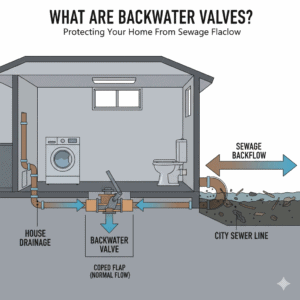
A backwater valve is a plumbing device that is installed to ensure that the sewage does not flow backward into your house.
Under normal circumstances, the effluents which flow out of your house go into the municipal sewerage system.
Nevertheless, sewage may revert to flow due to obstructions, downpours or a malfunctioning of infrastructure.
In the absence of a backwater valve, this sewage may overflow to your cellar resulting in severe damage of property and health risks.
A backwater valve (also known as a sewage backflow valve or backflow valve sewer) is a clever piece of engineering installed on your main sewer line. Think of it as a one-way security gate for your home’s plumbing system.
The valve is usually left open, and in this situation, the wastewater of your sinks, toilets, and showers flows freely into the main sewer of the city.
But when the municipal sewer is overstretched, such as it happens during heavy rain-falls in Ontario, the water level will increase and begin to push back toward your home.
It is here that the magic takes place.
The backwater valve sewer features a small flotation device.
Whenever it detects some water flowing in the opposite direction, the flap opens and closes physically sealing off your sewage so that it cannot flow into your basement drains.
There are individuals who mix backwater valves and back flow valves.
Both of them prevent unwanted flow but a backwater valve is designed to prevent reintroduction of sewage in your home whereas the backflow valve prevents contamination of water supply lines.
How Does a Backwater Valve Work?
A backwater valve is installed on your main sewer line, typically just outside or inside your basement wall.
It has a flap or gate through which the wastewater can flow but it closes automatically in case water attempts to flow in a different direction.
This easy process will end up saving homeowners thousands of dollars in repairs and it will also keep them out of dangerous situations of direct exposure to raw sewage.
How does a backwater valve prevent sewage backups?
The valve’s flap acts as a one-way gate. When sewage starts to flow backward due to a sewer backup, the flap closes, stopping the flow from entering your home. This ensures that your plumbing system continues to function safely even during high-pressure events in municipal sewers.
Are backwater valves required in Ontario homes?
While not mandatory in all Ontario homes, municipalities like Mississauga and Oakville strongly recommend installing them, especially in areas prone to flooding or with older sewer infrastructure.
Why Your Canadian Home Needs One Now
The “Combined” sewer systems were constructed in several old neighborhoods in cities such as Mississauga, Oakville and Hamilton.
These pipes are used in the sewage and rain water during extreme weather.
Once filled, the overflowing fluid has no place to escape other than to the highest point possible, which is the basement floor drain of a homeowner.
1. Preventing Catastrophic Water Damage
The mean backwater valve installation cost is a pittance when compared to the cost of 40,000 and above that would be expended to clean up a flooded basement.
An emergency plumber in Oakville often called to scenes where flooring, drywall, and priceless family mementos have been ruined by blackwater. A valve prevents this nightmare entirely.
2. Maintaining Home Insurance Eligibility
Several insurance companies in Canada have been enforcing backwater valves as a sewer backup insurance prerequisite.
In Ontario, 600,000 residents are in a high-risk area, which is prone to flooding; however it is possible that your claims will be denied or that your insurance premium rates will increase dramatically because you have not upgraded your residential plumbing.
3. Protecting Your Family’s Health
Sewer backups are not only dirty but they are biohazards.
Sewage discharge contains bacteria, viruses and parasites.
By installing backflow valve protection, you make sure that these contaminants remain in pipes of the city and do not enter your house.
Types of Backwater Valves
Backwater valves are made to ensure that the sewage does not return to your home, however, there are a number of valves in use, all fitting various plumbing systems and domestic requirements.
The knowledge of all types will assist homeowners in selecting the appropriate solution and prevent expensive fixing.
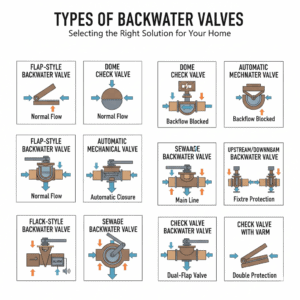
- Flap-Style Backwater Valve
- Dome Check Valve
- Automatic Mechanical Valve
- Sewage Backflow Valve
- Upstream/Downstream Backwater Valve
- Check Valve with Alarm
- Dual-Flap Valve
1. Flap-Style Backwater Valve
- Description: Uses a simple hinged flap to allow wastewater to flow out while preventing backflow.
- Pros: Affordable, easy to install, low maintenance.
- Best For: Homes with standard sewer lines and occasional backups.
- Consideration: May require manual cleaning if debris accumulates.
2. Dome Check Valve
- Description: A dome-shaped valve that seals the sewer line and stops reverse flow.
- Pros: Durable, reliable, minimal maintenance.
- Best For: Older homes or areas with moderate sewer flow.
- Consideration: Professional installation recommended.
3. Automatic Mechanical Valve
- Description: It has an automatic response mechanism in reverse flow with a spring loaded or motorized flap.
- Pros: Self-cleaning, highly reliable, requires little maintenance.
- Best For: Homes in flood-prone areas or regions with frequent sewer backups.
- Consideration: Higher upfront cost but offers long-term protection.
4. Sewage Backflow Valve
- Description: Valve with heavy duty that has been designed to handle large volumes of wastewater.
- Pros: Robust, ideal for severe backups or high-volume sewage lines.
- Best For: Homes with basements, multi-level plumbing systems, or flood-prone areas.
- Consideration: Professional installation required due to complexity.
5. Upstream/Downstream Backwater Valve
- Description: Installed either upstream (before the main sewer connection) or downstream (nearer to municipal connection), so depending on the layout of the home.
- Pros: Flexible placement, tailored protection based on local sewer setup.
- Best For: Homes with complex sewer connections or specific flood risk areas.
- Consideration: Placement must be determined by a qualified plumber.
6. Check Valve with Alarm
- Description: It has a sensor or an alarm system to inform the homeowners whenever the valve is closing or has a backup.
- Pros: Extra safety measure, real-time monitoring, prevents unnoticed backups.
- Best For: High-risk homes or homeowners who travel frequently.
- Consideration: More expensive than standard valves; requires occasional battery or system checks.
7. Dual-Flap Valve
- Description: Contains two flaps to give additional security, which makes breakdowns less likely to occur during high volume backups.
- Pros: Extra protection, reliable in extreme conditions.
- Best For: Homes in areas with frequent heavy rainfall or high sewer pressure.
- Consideration: Slightly higher maintenance to ensure both flaps work properly.
Backwater Valve Installation: What to Expect
To eliminate the possibility of sewage backups, a backwater valve should be installed, which also demands professional knowledge.
It is roughly what can be expected of homeowners in Ontario:
- Assessment: A plumber examines your plumbing system to decide where the best place to install the valve would be based on the layout of your pipes, accessibility to the basement as well as the conditions in your local sewer.
- Excavation (if needed): Minor excavation may be necessary to bury the pipes when they are in the ground. Landscaping or driveways are avoided being damaged.
- Valve Installation: Valve is firmly screwed into your sewer line, so that the flap or mechanical components are working properly to prevent backflow.
- Testing: The water is passed through the system to ensure that the valve opens and closes correctly.
- Cost Factors: The cost of installation will be different depending on the type of valve, complexity of your plumbing and the location of the sewer line.
Professional installation is important to the homeowners in the city of Mississauga, Oakville, Hamilton or Niagara Falls.
BOS Plumbing and Drains has the expertise to install a backwater valve that gives your residential plumbing in the home full protection and in line with the local codes.
How much does it cost to install a backwater valve in Ontario?
The backwater valve installation cost can vary depending on the type of valve, location, and plumber fees. On average, homeowners can expect to pay between CAD 800 and CAD 2,500. Hiring local plumbers ensures the installation meets local codes and reduces the risk of future problems.
Backwater Valves Maintenance and Care
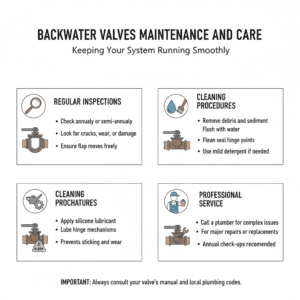
Even the finest backwater valves require frequent repairs to operate.
Failure to maintain them can cause blockages or failure of the valves or even expensive basement leaks.
This is how to maintain your valve in good condition:
- Regular Inspection: Check the valve after every 6-12 months to check debris, corrosion, or wear. Houses located in flood-prone requirements or old ones might require more frequent checks.
- Clean Debris: Remove any leaves, sediment, or grease buildup that could prevent the flap from closing properly.
- Replace Worn Parts: Seals, gaskets, or mechanical components can wear out over time. Prompt replacement ensures the valve continues to operate effectively.
- Professional Maintenance: Arrange a professional certified plumber to do the regular maintenance. Such professionals as the team of the BOS Plumbing and Drains can check and test your backwater valve, adjust it, and verify that it complies with all the plumbing regulations in the area. Their experience prevents your home plumbing system to be unsafe, inefficient and subjected to sewage overflows.
How Often Should a Backwater Valve Be Inspected?
For most homes, a simple inspection twice a year is sufficient. However, high-risk areas, homes with basements, or properties near municipal sewer lines may require quarterly checks to prevent backups.
When You Should Call a Professional Plumbers
There are also certain plumbing problems which are too risky to be fixed independently.
This can rescue your home which may have been severely damaged by calling a friendly professional in time.
Contact an emergency plumber and report that if you notice:
- Foul or unusual odors in your basement
- Slow or gurgling drains
- Standing water near the main sewer line
- Backflow during heavy rainfall or sewage backup
BOS plumbing and drains offer emergency plumbing servicee in Niagara falls, Hamilton, Oakville, and Mississauga in case of emergencies.
Their certified staff and 24 hour plumber is quick to avoid structural damages, expensive repairs and health risks, which may result due to exposure to sewage.
The BOS Plumbing provides professional plumbing repair that supports and maintains your residential plumbing system to be safe, compliant, and functional.
Choosing the Right Plumber in GTA
Selecting a reliable plumber is essential for both installation and maintenance of your backwater valve. When evaluating a service provider, consider:
- Experience: Look for plumbers with proven expertise in backwater valve installation and maintenance.
- Local Reputation: References, reviews, and word-of-mouth recommendations are key indicators of quality service.
- Certifications & Insurance: Ensure the plumber meets Ontario plumbing standards and carries liability insurance.
- Transparent Pricing & Warranties: Clear estimates and service guarantees provide peace of mind.
BOS Plumbing and Drains provides professional services of backwater valves to homeowners in GTA.
From Installation to regular maintenance and emergency response, serving areas Mississauga, Oakville, Hamilton and Niagara Falls and their certified staff, will provide protection to your home to avoid sewage floods and your plumbing system operate efficiently throughout the year.
Local Expertise: Why Hiring the Right Pro Matters
There is a wide difference in plumbing codes across municipalities.
Plumbers in Mississauga are familiar with the local demands in the “Peel Region” whilst plumbers in Niagara Falls Ontario are aware of the soil compositions and depth of the pipes.
The benefit of working with the best plumbers in Hamilton Ontario is that there are the correct filings and your installation is kept up to the National Plumbing Code of Canada.
When a valve is fitted in the reverse direction or wrong inclination it may just serve to seal you inside your own house, something no professional plumber would ever attempt.
Pro Tip: Many cities, including Toronto, Mississauga, and Hamilton, offer subsidies or rebates for backwater valves installation. In some cases, you could get back up to 80% of the backwater valve installation cost.
Signs You Need a Plumbing Repair or Upgrade
If you’ve noticed any of the following, it’s time to call expert plumbers for an inspection:
- Gurgling Drains: If your floor drain makes “glug-glug” sounds when you flush the toilet, air is being trapped by rising water.
- Slow Drainage in the Basement: This often indicates a partial blockage or a backup beginning in the lateral line.
- Persistent Sewage Odors: A dry or faulty backwater valve sewer can allow sewer gases to seep into your home.
Do not wait until the next “1-in-100-year” storm arrives to be able to test your plumbing system.
That plumbing repair you just need to get should be done on schedule or you require a complete upgrade of your flood protection, either way being Canadian is to protect your biggest investment.
Conclusion
A backwater valve is not simply a piece of plastic but it is a peace of mind.
To the shores of Lake Ontario as well as the escarpment it is the ultimate line of defense against the increasing wave of urban flooding to homeowners.
You can avoid the misery of heartbreak and the financial devastation of a sewer overflow next week by spending a little today on professional residential plumbing services.
You can call a certified local expert, who is aware of the peculiarities of the Ontario climate and can offer you a quote on backwater valves, in case you need an emergency plumber or just want one.