
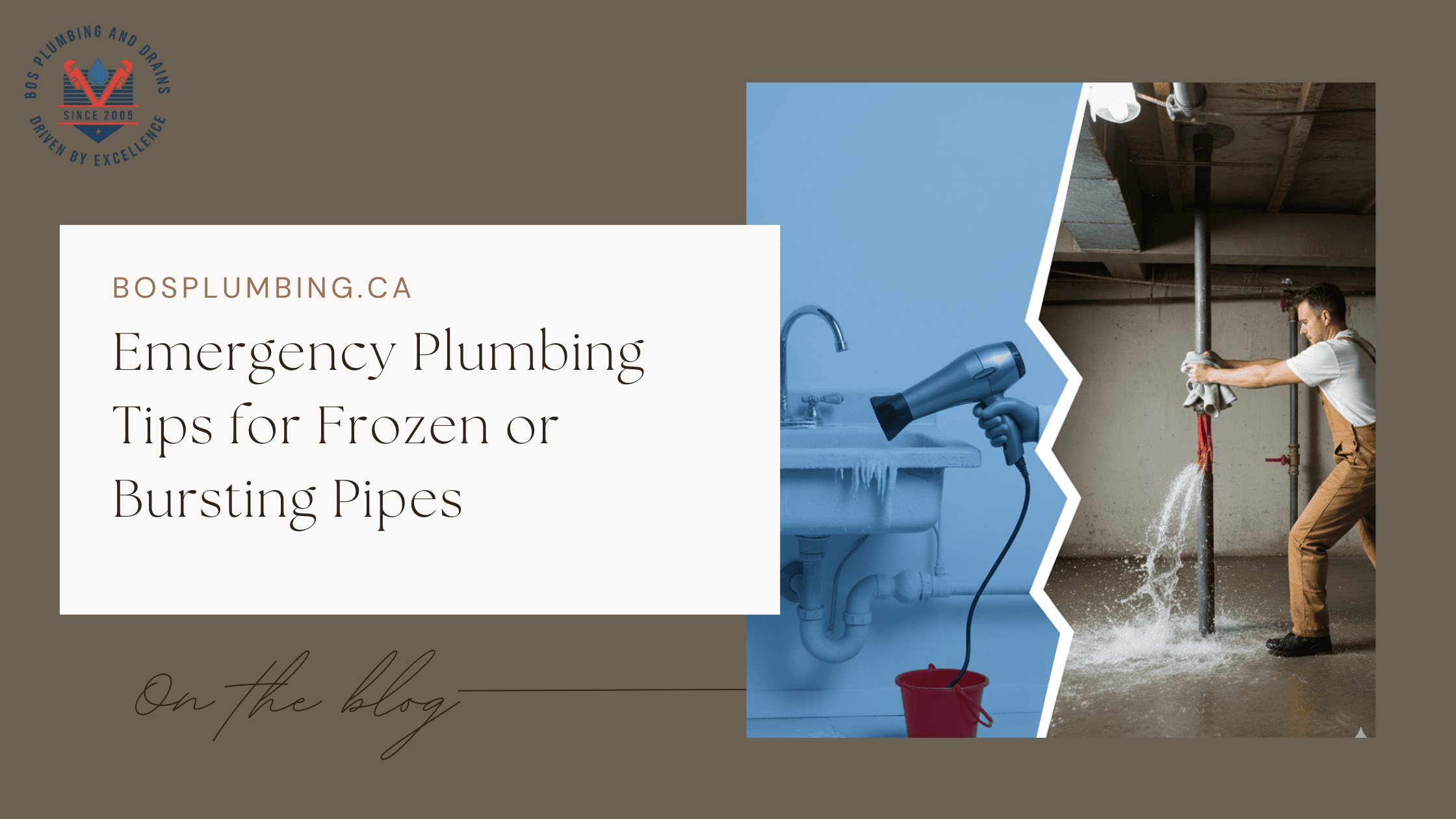
Canadian winters can be extremely harsh, with temperatures often dropping well below freezing. While snow and icy roads are expected during the season, many homeowners forget that freezing weather can also cause serious plumbing problems. One of the most common winter issues is plumbing frozen pipes, which can lead to water damage, costly repairs, and major disruption in daily life.
When water pipes freezing, the water inside the pipes expands as it turns to ice. The resulting pressure can crack the pipe and eventually cause bursting pipes, releasing large amounts of water that can flood your basement, kitchen or bathroom. Knowing what to do in these situations can make a huge difference when it comes to preventing costly damage.
Frozen plumbing? Think it won’t happen to you? Unfortunately, the cold Canadian winters can catch us off guard. It’s only when the temperature falls to around -10°C or lower that plumbing system damage can start to occur. A small freeze can very quickly escalate into a burst water pipe and significant water damage to your home, which can cost you in the hundreds of thousands of dollars. So, here is a practical Canadian primer on how to manage a burst water pipe in case of unexpected cold weather.
This guide describes the warning signs, emergency procedures and preventative measures Canadian homeowners should be aware of with regards to frozen pipes in house plumbing systems.
Why Pipes Freeze in Canadian Homes?

Pipes are frozen when the temperatures become low to the point where the water in the pipes has become ice.
The winter temperatures in most parts of Canada can continue to be below zero degrees long enough, and thus pipe freezing is a standard domestic problem.
Certain parts of the house are even more susceptible than others.
The pipes that run in exterior walls, interiors of unheated garages, basements, crawl spaces, or attics are more prone.
The homes of older constructions can also lack modern plumbing systems of the household plumbing with minimal insulations on the exposed pipes.
When cold air reaches these pipes, pipes freezing in house plumbing lines can happen much faster.
Unoccupied homes on winter holidays are also not safe since heating systems can be reduced, and the temperatures in the homes can be reduced.
How to Spot Frozen Pipes in Your House
The first sign of water pipes freezing is usually subtle. When you open your tap, you will find that the water pressure has decreased slightly or that the water is whistling in a peculiar way.
When you turn the handle and no water flows, then chances are that you have the frozen pipes in house walls or in the basement.
Test the places where the pipes are most exposed to cold.
These are crawl spaces, unheated garages and under kitchen cabinets against the outside walls.
When you notice some frost on the outside of a pipe, you have to consider it as an emergency.
Warning Signs Your Pipes May Be Freezing
Learning to identify the initial symptoms of frozen pipes would make homeowners take the necessary early steps to prevent bursting of the pipes.
The freezing of water in the pipe also limits water flow and results in pressure in the plumbing line.
Here are some common warning signs:
- Reduced or no water flow from faucets
- Frost or ice buildup on exposed pipes
- Strange banging or whistling sounds in the plumbing system
- Unusual smells coming from drains
- Bathtub drain freezing during very cold nights
- A section of pipe that feels extremely cold to the touch
A frozen drain pipe can also cause sinks, bathtubs, or washing machines to drain very slowly. If you notice any of these signs, it’s important to take action immediately.
Emergency Plumbing Tips for Frozen Pipes
If you suspect your pipes are frozen, acting quickly can prevent serious damage. These emergency plumbing tips can help you safely address the issue.

1. Turn Off the Water Supply
The initial action towards the plumbing frozen pipes is to cut the supply of the major water.
This will relieve pressure on the pipes, and will reduce the chances of a burst water pipe should the frozen part break.
When dealing with a plumbing emergency, it may be significant to know where the main shut-off valve of your home is.
2. Open the Faucet
Once the water is cut off, turn the pipe faucet attached to the frozen pipe open.
This removes pressure within the pipe and water starts flowing as soon as the ice starts melting.
It is also a good idea to leave the faucet slightly open, when defrosting frozen pipes.
3. Apply Gentle Heat to the Frozen Pipe
Applying heat gradually is the safest way to thaw frozen plumbing lines. Common methods used for defrosting pipes include:
- Hair dryers
- Heating pads
- Warm towels wrapped around the pipe
- Space heaters placed near the pipe
These processes assist in the unfreezing frozen pipes gradually without further destruction.
Open fires like propane torches are not to be used as this can deform pipes and cause a fire hazard.
4. Check Nearby Pipes
When one of the pipes is frozen, one is likely to find that the other pipes in the same area might have been frozen as well.
Check plumbing lines in the immediate neighborhood to make sure they are in good working order.
Inventory of the immediate home plumbing system will avoid further difficulties of freezing in future.
5. Call an Emergency Plumber
In case the frozen pipe cannot be safely thawed or you suspect that it is damaged, to be on the safe side, it is best to call in a professional emergency plumber.
A 24 hour plumber near me will enable you to locate qualified professionals that deal with frozen pipes crisis in winter.
Skilled plumbers frozen pipes would have done it with special tools that would safely thaw out pipes without resulting in further destruction.
What To Do If a Pipe Bursts
In a very unfortunate situation, at other times the freezing of pipes causes the busting pipes even before the homeowner observes the red flags.
Gallons of water can be discharged through a burst water pipe in a few minutes, and this will cause extensive destruction to walls, floors and furniture.
If this happens, take these steps immediately:
- Shut off the main water valve.
- Turn off electricity in affected areas if water is present.
- Open faucets to drain the remaining water from the pipes.
- Remove standing water if possible to reduce property damage.
- Contact a professional emergency plumber for immediate plumbing repair.
Leakage of pipes is regarded as one of the greatest plumbing emergencies and immediate response is required to ensure minimal harm to your residential plumbing system.
Safe Methods for Defrosting Frozen Pipes
Defrosting pipes takes time and not flames.
Do not use a propane torch or any open flame. This is a giant fire hazard and will ruin your household plumbing.
To unfreezing frozen pipes, the hair dryer or portable space heater (at a safe distance) can be used.
Begin heating the pipe of the faucet end and proceed towards the frozen region.
This enables the flow of melting water using the open tap.
You may require to pour hot (not boiling) water into the drain or apply a heat lamp in case you have a frozen drain pipe or you notice the bathtub drain freezing.
All you have to do is not to break porcelain fittings with temperature fluctuations.
Here is a safe approach to defrosting frozen pipes:
- Identify the frozen section of pipe.
- Keep the connected faucet slightly open.
- Apply gentle heat gradually to the pipe.
- Start heating the pipe closest to the faucet and move backward.
- Monitor the pipe as ice melts and water flow returns.
This slow approach helps avoid cracks or broken pipes caused by sudden temperature changes.
How to Prevent Frozen Pipes in Winter

Prevention is always better than dealing with emergency repairs. With a few simple precautions, homeowners can reduce the risk of pipe freezing during Canadian winters.
1. Insulate Exposed Pipes
Insulation of pipes in basements, crawl spaces and garages can be used to ensure safe temperatures.
Pipe insulation sleeves are inexpensive and effective for frozen pipe prevention.
2. Keep Indoor Temperatures Consistent
Also, with the thermostat at home, leave it above 13 °C (55.4 °F) even when not at home.
Consistent temperatures helps prevent pipes freezing in house plumbing systems.
3. Let Faucets Drip During Extreme Cold
A little drip of water flowing at very low temperatures will ensure that water flows through the pipes and this prevents freezing.
4. Open Cabinet Doors
Pipes in kitchen and bathrooms tend to flow behind cabinets.
Keeping the doors of the cabinets open will enable warm air in the house to flow around the pipes.
5. Seal Cracks and Gaps
Small cracks around the windows, doors or foundations could allow cold air to go inside.
The sealing is useful in guarding the open pipes against the cold.
When Should You Call a Professional Plumber?
Some plumbing issues require professional assistance. If frozen pipes keep recurring or you suspect damage, contacting an expert is the safest option.
Consider calling a plumber if:
- Pipes remain frozen after attempting to thaw them
- You notice visible cracks or leaks
- Water pressure suddenly drops
- Multiple pipes freeze in different areas
- You suspect broken pipes inside walls or ceilings
Finding a Reliable Local Plumber
Sometimes DIY is not enough and you need an emergency plumber who would be aware of certain difficulties of our climate.
It is a good start to find local plumbers that have high ratings but during a crisis, speed and trust are all that matters.
In the GTA, you could always search plumber Toronto to find somebody who is familiar with the older home plumbing systems, found in the historic areas of the city.
It may be a 3:00 AM leak or an annual check up but it is part of being a responsible homeowner to have a 24 hour plumber on speed dial.
Spotlight on BOS Plumbing and Drains
To the residents of Mississauga, Oakville, Hamilton and Milton, BOS Plumbing and Drains is an emergency name when it comes to the winter.
Their staff has more than 20 years of experience and they are especially proficient in dealing with plumbing frozen pipes and intense blockages that develop in the event of extreme temperatures.
What is distinguishing them to the Canadian homeowners is their openness. They offer:
- 24/7 Emergency Support: Since a burst water pipe is an unplanned event, we can be there at all hours. We guarantee that your house will be comfortable and healthy even on the worst nights in Canada.
- Precision Leak Detection: We are able to locate freezes and leaks behind the wall using high-tech that does not involve guesswork. This enables us to correct the situation as soon as possible and cause minimum damages to your property.
- Licensed & Experienced Experts: We have full licensed, insured and highly trained staff. Having worked in the GTA over the years, we are locals and can take any residential plumbing problem with a hundred percent compliance and attention.
Be it a frozen drain pipe or a complete plumbing repair you should find a team that values honesty and quick response such as BOS Plumbing and Drains, and all the difference would be when it comes to saving your home out of water damage.
Why Choose Professional Plumbing Services?
Canadians love tackling a project or two on a Saturday morning, but household plumbing’s a different story. That’s a job where you want real expertise.
A professional plumbing 24 hour service doesn’t just patch a leak and call it a day; they’ll check your whole plumbing system to catch problems before they turn into big, wet disasters.
When you’re hunting for the best plumber near me, make sure they’re licensed and insured.
The good ones show up with heavy-duty gear, industrial thawers, “Pro-Press” tools, and fix pipes in minutes, not hours.
Conclusion
Don’t let winter turn your basement into a skating rink. Keep an eye out for signs your water pipes are freezing, act fast, and don’t be shy about turning up the heat or adding insulation.
And if things get dicey, call a pro, especially when you’re up against ice.
Dealing with a leak or a clog right now? Don’t wait and hope it’ll fix itself when the ice melts. Call a local plumber expert and get your water moving again.