

Does your property have a problem with water? If you’ve seen puddles in your yard that won’t go away, your basement is still wet, or your yard has soggy spots, it may be speaking to you. For many Canadians, poor yard drainage is a serious and frequent issue, particularly in a city such as Mississauga, Oakville, Hamilton or most cities in the Greater Toronto Area. A french drain may be a good addition to your home, but how do you know?
Let’s walk through the signs, the solutions, and what to do next.
What Is a French Drain and How Does It Work?
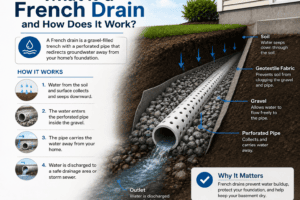
A french drain system is a trench that is filled with gravel and a perforated pipe (also referred to as a french drain pipe or weeping tile) and is under the soil surface. The trench slopes downward, allowing water to flow naturally downhill, filter through the gravel, into the pipe and away from your home’s foundation and yard to a safe drainage point.
A french trench drain is no simple drain. It helps to keep your basement dry during Ontario’s snow melt in spring as well as during periods of heavy rain, helps to protect your foundation, and prevents mold growth. Consider it the first line of defence against water damage to your home.There are two typical varieties:
- Interior French Drain: Installed beneath the basement floor to collect water entering inside the home.
- Exterior French Drain: Installed outside around the foundation to stop water before it enters the basement.
Both systems enhance the overall house drainage system and help to keep long term water damage to a minimum.
7 Clear Signs You Need a French Drain
- Water Is Pooling in Your Yard After Rain
- Your Basement Is Leaking or Has Moisture Issues
- You’re Dealing With Recurring Mould or Mildew
- Your Foundation Has Cracks
- Your Downspouts and Gutters Can’t Keep Up
- Your Yard Has Low-Lying Areas or a Poor Slope
- Your Shower Drain or Floor Drain Is Backing Up

1. Water Is Pooling in Your Yard After Rain
One of the most apparent indications that a french drain is required is a pool of water in the yard that persists for hours if not days after a rainfall. This is an indication that the ground has become sodden and can no longer absorb water. This is a very common problem in Ontario, where heavy rains occur during the spring season, coupled with the melt of snow.
A drainage issue will be present if the ground continues to feel spongy or muddy an extended period of time after the rain. The most common solution is to install a french drain around the house perimeter or in problem areas of your lawn.
2. Your Basement Is Leaking or Has Moisture Issues
When you see water in your basement, you are not a coincidence, it’s a symptom. Your home drainage system is not properly diverting water away from the foundation if you see water leaking through foundation walls, spots on the floor that are wet, you see a powdery white residue on the foundation walls or, god forbid, emergency basement flooding.
The french drain installation either next to or under your foundation will prevent the groundwater from ever coming into contact with the walls of your basement. The best protection for your home is an install of a combination french drain system and sump pump installed in more severe cases.
3. You’re Dealing With Recurring Mould or Mildew
If there is always moisture in the basement or crawl space, it is ideal for mold to grow. Excessive moisture infiltration is one of the common reasons, if you have noticed a musty smell, visible mold on walls or joists and have seen family members with unexplained allergy symptoms.
Post basement flooding repair is costly and cumbersome. A preventative measure, using a french ditch drain will eliminate the water source that can allow mould to grow.
4. Your Foundation Has Cracks
If there is a crack that you see in your foundation wall or floor slab, then it is a red flag and it should be ignored. They are often created by the hydrostatic pressure; this type of pressure is generated when water-filled soil presses against the exterior of your foundation walls.
A french drain system installed around the outside of your home can alleviate that pressure by capturing and redirecting ground water to other areas before it can exert pressure on your home’s foundation. Unless these foundation cracks are properly repaired, they will only get worse and cause expensive structural repairs. When combined with sewage repair and/or drain repair, as necessary, a french drain installation will provide your home with total waterproofing protection.
5. Your Downspouts and Gutters Can’t Keep Up
When your eavestroughs often overflow, or your downspouts pour water immediately adjacent to your foundation, it has to go somewhere – and it will likely seep into your basement. The smart and long term way to deal with this roof runoff is to have a french drain around the house that will capture and redirect it when it happens to be happening in the same timeframe as ice damming as well as heavy rain and rapid spring melt.
If a french drain system is designed properly, coupled with good drain repair and periodic maintenance of the unclogging drain, your property will remain dry all year long.
6. Your Yard Has Low-Lying Areas or a Poor Slope
Gravity is against you if your property is flat, slopes towards your home, or low spots where water accumulates naturally. Canadian homes can experience a lot of shifting around the grading of their home as freeze-thaw cycles occur, especially throughout the Southern Ontario region.
Along the natural water flow route, a french trench drain or french ditch drain is a way of collecting and safely redirecting water away. This is also a good consideration when considering a proper length of french drain installation to avoid water buildup which can cause weakening or even failure of the retaining wall.
7. Your Shower Drain or Floor Drain Is Backing Up
When shower drain clogging occurs more often, and basement floor drains back up and gurgles during heavy rain, it’s not necessarily a simple clog. It may mean that the plumbing system is under pressure from groundwater infiltration or from a municipal sewer backup or the overfilled drain pipe.
In such instances, your plumbing service provider may suggest installing a combination of unclogging drain solution, a back water valve install, or even a sewer backup valve to secure your home from sewer backup throughout a heavy rainfall event and also a french drain system to alleviate the overall water pressure on your plumbing.
What About Sewage Backup and Emergency Flooding?
When you already have a sewage cleanup in basement situations and emergency basement flooding, the emphasis isn’t on planning, but on action. Basement flood clean up must be carried out in a timely manner, as it can cause mold growth, structural damage and health risks. One of the best ways to ensure this doesn’t occur again after an emergency is with a french drain system, along with a backwater valve sewer installation.
Flooding is a stressful time and sewer line repair near me services are stressful as well. It’s better to have a plumbing service that you can trust and call in advance of any crisis.
Why Drainage Problems Are Common in Canadian Homes
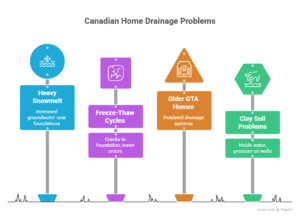
Canadian homes are exposed to specific drainage issues throughout the year due to the variations in weather, freezing and thawing and excessive rain.
Heavy Snowmelt
In spring, as snowmelt increases, there is a significant increase of groundwater in the vicinity of foundations. Many houses that are not in good condition for drainage suffer from leaking and flooding in this season.
Freeze-Thaw Cycles
As the soil around foundations expands and contracts during Ontario winters, cracks will open and close as well.During the winter in Ontario, the soil will expand and contract around the foundation, and so will cracks. This action can cause cracks in the foundation and let water in the basement.
Older GTA Homes
Numerous homes in Mississauga, Hamilton, Cambridge and Oakville were constructed decades ago, and their drainage systems are outdated and don’t adequately waterproof the home.
Clay Soil Problems
Soils around the GTA (in parts) are clayey, holding water longer and exerting more pressure on basement walls. This can cause storm failure of the drainage system.
As a result, over time many homeowners need to have the french drain installation, waterproofed or installed for extra protection.
French Drain vs Sump Pump: Do You Need Both?
A french drain is usually used in conjunction with a sump pump and they are used for different purposes.
The drain system gathers excess ground water and channels it towards the sump pit which in turn removes the ground water safely away from the home.
You may need a sump pump install if:
- Your basement floods frequently during storms
- Water collects beneath the basement floor
- Your current pump struggles during heavy rainfall
- You hear unusual noises from the pump
- The system is older and unreliable
When your pump is running continuously or it’s broken, you may need to replace sump pump equipment before the next big storm hits and floods your home.
A sump pump and french drain system will provide more protection from water intrusion and basement flooding.
What Happens If You Ignore Drainage Problems?
Water issues rarely improve on their own. In most cases, the damage becomes worse and more expensive over time.
Ignoring drainage problems can lead to:
- Foundation deterioration
- Mold and mildew growth
- Damaged flooring and drywall
- Electrical hazards
- Poor indoor air quality
- Structural weakening
- Increased repair costs
- Costly sewage cleanup in basement
In extreme flooding conditions, you may need to do emergency basement flood clean up, extensive restoration projects, and plumbing repair services.
An initial damp patch can become serious property damage if it isn’t dealt with.
BOS Plumbing and Drains: French Drain Specialists
When it comes to french drain installation, drain repairs, sump pump install, replace sump pump, backwater valve install, and complete plumbing repair homeowners across Canada trust BOS Plumbing and Drains.
BOS Plumbing and Drains is experienced, having served the Greater Toronto Area for over 20 years, Mississauga, Oakville, Hamilton, Milton, Niagara and Cambridge. They have a licensed and skilled team to manage all the tasks ranging from the french drain system design and installation to sewer line repair near me calls, septic pump repair, drain repairs, plumbing leak fixes, and complete emergency plumbing service.
From the need for a local emergency plumber to respond to an emergency, to finding out the cost and planning for a french drain installation, BOS Plumbing and Drains has the expertise, pricing and services to do the job correctly.
Their team is well informed of the distinct drainage issues Canadian homeowners encounter such as clay soil, deep frost line and quick spring thaw, as trusted plumbers in Mississauga, plumbers in Oakville and throughout the GTA.
Don’t be pushed into a decision by water loss. Call BOS Plumbing and Drains now and safeguard your home for the next storm season.
FAQs
1. What is the difference between a French drain and a regular drain?
A regular drain collects surface water at a single point. A french drain system uses a perforated pipe buried in a gravel-filled trench to collect and redirect groundwater and surface water across a wider area, making it far more effective for foundation and yard drainage issues.
2. How much does French drain installation cost in Canada?
French drain installation cost in Canada varies depending on the length of the drain, depth required, and accessibility of the area. Costs typically range from $1,500 to $6,000+ for exterior installations. A local plumbing company or drainage specialist can provide an accurate quote based on your specific property. Always get multiple quotes and ask about the full scope of work involved.
3. Can I install a French drain myself?
While some minor yard drainage solutions can be DIY projects, a proper french drain installation around a home’s foundation should always be handled by a licensed professional. Incorrect slope, improper pipe placement, or using the wrong materials can make the problem significantly worse and lead to costly basement flooding repair down the road.
4. Does a French drain work in winter in Canada?
In Canadian climates, french drain pipes can freeze during extreme cold if they’re not installed deep enough below the frost line. A professional installer familiar with local frost depths as experienced plumbers in Mississauga and plumbers in Oakville will ensure the system is designed to function properly year-round.
5. Do I need a backflow valve with a French drain?
Depending on your property’s situation, yes. A backflow valve basement installation or a sewer backup valve may be recommended alongside a french drain system to prevent municipal sewer water from backing up into your home during heavy storms. A local emergency plumber or drainage professional can assess whether your home needs both systems.