
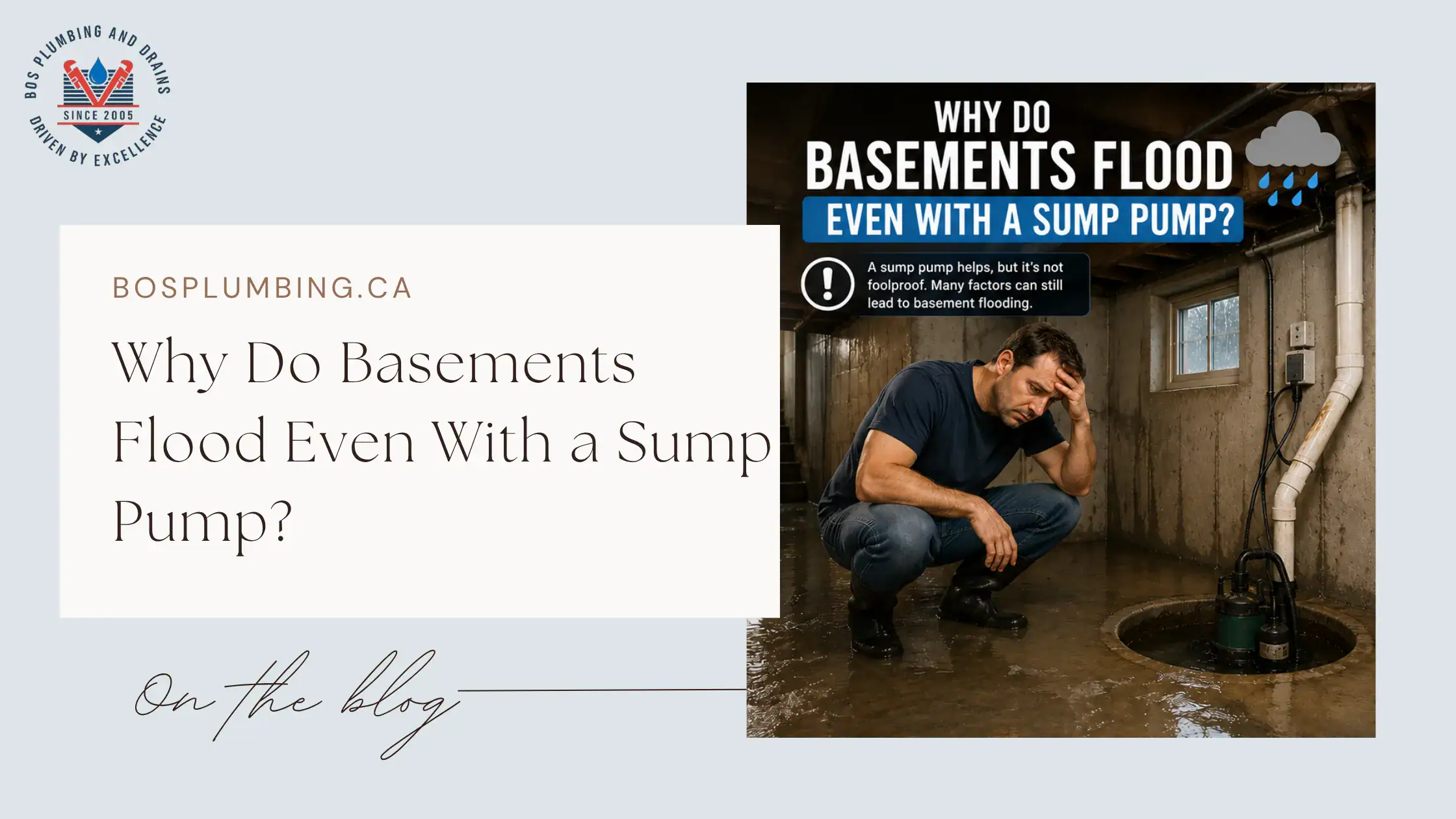
You’ve seen it, and experienced it water has seeped across the floor of your basement after a heavy rainfall when you thought you had the sump pump working.You’ve seen it and you’ve experienced it water has backed up in your basement even when you have a sump pump. This is an expensive and bothersome fact for many Canadian homeowners in the cities of Mississauga, Oakville and Hamilton, GTA. The reality is, it’s not a “set it and forget it” solution to preventing basement flooding water from entering. Water can still get in for a number of reasons, which is why it’s important to know them and save yourself thousands of dollars in damage.
Let’s break it down.
What Is a Sump Pump and How Does It Work?
A basement sump pump is located in a small hole in the bottom of the floor of your basement, called a sump pit. A float switch in the sump pit will cause the pump to start when the level of groundwater or rainwater has reached a certain point. The water is then forced through a discharge pipe and away from your house’s foundation.
It’s not that hard to do. However, several parts have to function in perfect harmony to the exact moment. Even one part can malfunction and cause basement flooding even if the pump is operating.
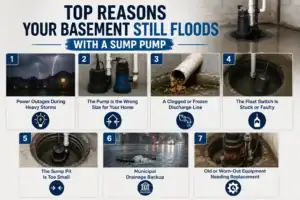
Top Reasons Your Basement Still Floods With a Sump Pump
- Power Outages During Heavy Storms
- The Pump Is the Wrong Size for Your Home
- A Clogged or Frozen Discharge Line
- The Float Switch Is Stuck or Faulty
- The Sump Pit Is Too Small
- Municipal Drainage Backup
- Old or Worn-Out Equipment Needing Replacement
1. Power Outages During Heavy Storms
This is the No. 1 reason. The same storm that’s carrying water towards your foundation is the same storm that is blowing out your electric power. A regular electrical home sump pump fails when you need it most, with a power outage.
The solution? A sump pump with float switch and battery back-up system. An alternate pump with a 12-volt battery back-up system will automatically switch on if the main pump goes down. It’s a relatively small price to pay for flood clean up. When you’re not certain of what you’ve got in place, talk to a sump pump plumber to inspect your system prior to the next storm season.
2. The Pump Is the Wrong Size for Your Home
There are different types of sump pumps and they are not designed for all homes. A typical 1/3 HP pump may be capable of dealing with an average rainfall, but during the spring snow melt or in Ontario’s rainy season, when it is likely to occur, the pump is unable to keep up with the flow of water.
If this is a common problem with your sump pump not working, it may require a larger size. A licensed plumbing company can determine how much water your basement is taking in and determine the capacity of the pump you need or suggest putting in a sump pump of larger horsepower.
3. A Clogged or Frozen Discharge Line
Your pump might be operating, but water can’t get out if the discharge line is clogged, cracked or frozen. In wintertime, discharge lines that lead out close to the foundation could freeze solid and return water to the sump pit, over flowing into your basement.
It is a good practice to carry out this sump pump maintenance to ensure the sump pump discharge line is inspected seasonally, particularly before the fall frost and after ice melts in the spring. Debris and ice can drain pipe clogged, which is a very common and preventable cause of basement flooding.
4. The Float Switch Is Stuck or Faulty
Your pump will turn on when it detects the presence of water with the float switch. Your pit may be full of water, but if the basement sump pump is tangled, stuck up against the pump wall or not functioning, it will not turn on. Some of the most common sources of an unexpected flood are from a sump pump with a float switch.
A quick testing of a float switch is to pour a bucket of water into the pit and determine if the pump turns on. If it doesn’t, then contact a plumbing service immediately. It is best to discover a storm is broken before it arrives.
5. The Sump Pit Is Too Small
In heavy rains, the sump pit fills up very rapidly. This results in the pump starting and stopping very quickly, leading to premature wear and tear on the pump’s motor, as well as often not keeping up with incoming water. The correct sump pit installation is a major factor in the life of the oil filter.
If you carry out basement sump pump installation many years ago, but are not sure how many gallons of water your home uses, it might be necessary to consider the need for a new pump and pit.
6. Municipal Drainage Backup
The issue may not be that your pump has gone bad, it may be that the system in the city has. Municipal storm sewers may become overwhelmed during major storms and back up, and force storm water into residential plumbing systems via floor drains. This type of flooding goes around your sump pump.
A backwater valve is an effective solution, and may be a cost-effective option under municipal subsidy programs in Ontario. A certified plumbing repair expert will be able to put one in place fast, and can assist you to apply for any rebates that might be available.
7. Old or Worn-Out Equipment Needing Replacement
Replace sump pumps every 7 – 10 years. A pump that is getting older, harder to operate and/or is making unusual sounds is a sign that it is worn. It’s a very expensive risk to take if it goes out during a storm. Scheduling sump pump replacement in advance can overcome emergency situations and safeguard your home’s structural integrity.
A professional sump pump repair service will be able to determine if the repair is adequate or if it’s more of an investment to have a sump pump installed.
Does Your Drain System Play a Role?
Absolutely. If you have a working sump pump, but there is a drain pipe clogged caused by trees, silt or debris, water may back up into your basement. Some plumbing system health check services don’t address the need for drain snaking and drain repair.
Drain snaking unclogs clogs before they become a problem, and drain repair allows you to fix any cracks or broken pipes that allow groundwater to enter from unsuspecting locations. If a plumbing leak develops in a foundation wall or drain, it can be continually putting moisture into your basement, causing your sump pump to run longer than necessary, and ultimately failing.
How Often Should You Service Your Sump Pump?

Ideally, sump pump maintenance should be done at least twice a year once before spring thaw and once before winter freeze. A licensed tech will do the following during a maintenance visit:
- Test float switch, motor operation
- Check & unclog discharge line
- Inspect sump pit for debris and sediment
- Compare the pump’s capacity with the present water demand of your house.
- Recommended to sump pump repair/replace if required
It’s much more cost effective to be proactive than to call an emergency plumber after a flood.
Is It Time for a New Sump Pump Installation?
If you’re having problems with your existing pump or need a new one, a sump pump installation by a certified professional might be the best solution. For most homes, the right basement sump pump installation, including battery backup pumps, can make all of the difference whether the sump is in the basement, a secondary pump is installed or if the pump is upgraded.
The sump pump installation cost will differ on the basis of type of system and the complexity of the work, but it is always worth the investment when compared to the water damage restoration expenses as high as $10,000.
Trusted Sump Pump Experts Across the GTA: BOS Plumbing and Drains
Canadians all over the GTA rely on BOS Plumbing and Drains for basement flooding, sump pump repair, sump pump installation and full drain repair services.
For more than 20 years BOS Plumbing and Drains has been providing homeowners and businesses in the Greater Toronto Area, Mississauga, Oakville, Hamilton, Milton, Niagara and Cambridge with plumbing and drainage services. They have a licensed and experienced staff of technicians that can sump pump replacement, sump pit installation, drain snaking, plumbing leak repair, and full plumbing repair services.
BOS Plumbing and Drains will always provide the best, prompt and honest service, whether you need a same day plumber or a scheduled sump pump maintenance service. They work as a plumber and emergency plumber service and will contact a 24 hour plumber if you need to do so.
As local plumbers and plumbers in Mississauga and plumbers in Oakville, they have real-life experience in every aspect of plumbing, from troubleshooting a difficult plumbing leak to installing a complete basement sump pump installation.
Avoid being surprised by a rainstorm when the sump pump is not working. Call in BOS Plumbing and Drains today and rest assured the water won’t rise.
FAQs
1. Can a sump pump fail during a storm?
Yes. Power outages, float switch malfunctions, clogged discharge lines, and pump overload are all common reasons a sump pump not working during a storm is reported. Always have a backup system in place.
2. How do I know if my sump pump needs to be replaced?
Signs include constant cycling, loud motor noise, pump running but no water being discharged, and the pump being over 10 years old. Contact a sump pump plumber for a professional assessment.
3. What causes a drain to back up into the basement?
Blockages from tree roots, grease buildup, or collapsed pipe sections can cause your drain pipe clogged condition, leading to sewage backup into the basement. Drain snaking and drain repair are the most common solutions.
4. How much does sump pump installation cost in Canada?
Sump pump installation cost in Canada can range from $500 to $2,500+, depending on whether it’s a new installation, a replacement, or includes a battery backup unit. Get a local quote from a trusted plumbing company for accurate pricing.