

Constructing a new house is a big investment, and establishing your plumbing system at the start is key to a comfortable, safe, and efficient home. Plumbing is not just about pipes—it’s about building a system that supports your daily life.
Construction mistakes can lead to recurring issues like clogged sinks, kitchen backups, or expensive plumber leak repairs. In Canada, where freezing temperatures and hard water are common, the risks are even higher if plumbing is not properly planned.
This comprehensive checklist helps builders and homeowners ensure their plumbing system is efficient, durable, and built to last.
Why New Construction Plumbing Matters More Than You Think

With new builds, you have a unique opportunity to design your entire household plumbing system from scratch. Unlike renovations, there are fewer limitations—but that also means mistakes can go unnoticed until it’s too late.
Poor plumbing design can result in:
- Long-term drainage issues requiring frequent drain repair
- Hidden leaks behind walls needing urgent fixes
- Increased risk of clogged toilets and fixture failures
- Premature system replacements like water heater replacement
Experienced professionals like BOS Plumbing and Drains understand that new construction plumbing isn’t just about fixing problems later—it’s about preventing them through proper installation and planning.
1. Planning Your Plumbing System (Foundation Stage)
The most critical step in any new construction plumbing project is planning. A well-designed system ensures smooth water flow, proper drainage, and minimal maintenance.
During this phase, builders and plumbers should:
- Design optimal layouts for kitchens, bathrooms, and laundry areas
- Ensure proper spacing between fixtures for accessibility
- Plan pipe routes that reduce bends and pressure loss
- Allocate space for systems like water heaters and sump pumps
In Canadian homes, insulation planning is essential to prevent frozen pipes. Without it, homeowners may face winter emergencies requiring a local emergency plumber.
2. Rough-In Plumbing Checklist
Rough-in plumbing is the stage where the core structure of your plumbing system is installed before walls and floors are finished. This phase determines long-term system performance.
A complete rough-in checklist includes:
- Installation of hot and cold water supply lines
- Installation of bathroom and kitchen drain systems
- Vent pipe installation for proper airflow and pressure balance
- Leak testing and pressure testing
Proper rough-in work prevents issues like uneven water pressure, leaks, and frequent plumbing repairs. It’s also the stage where compliance with Canadian building codes is verified.
3. Core Plumbing Systems Every New Home Needs

Modern homes require advanced plumbing systems to efficiently handle daily usage. Installing these systems during construction avoids costly upgrades later.
✔ Water Heater System
Choosing between tank and tankless systems depends on household needs. Proper installation ensures consistent hot water and reduces the need for early water heater replacement.
✔ Sump Pump Installation
With heavy snowfall and seasonal rain, sump pump installation is essential in Canada. It prevents basement flooding and protects your home’s foundation.
✔ Backwater & Backflow Valves
Installing backwater valves and backflow systems prevents sewage from entering your home during heavy rain or system overload—common in urban areas.
✔ Water Softener System
Hard water can damage fixtures and appliances. A water softener system reduces mineral buildup, improves water quality, and extends the life of your plumbing system.
4. Exterior Plumbing Setup (Often Overlooked)
Exterior plumbing is often overlooked but plays a critical role in protecting your home from long-term damage. In Canada, where freezing temperatures, snow, and seasonal thaw cycles are common, outdoor plumbing must be built for durability and resilience.
A properly planned exterior system should include:
- Frost-proof hose bibs to reduce the need for frequent outdoor faucet repair
- Underground pipe placement below the frost line to prevent freezing
- Proper grading and slope to direct water away from the foundation
- Drainage systems to handle heavy rainfall and snowmelt
Without these measures, homeowners may experience burst pipes, foundation damage, or standing water around the house. These issues often lead to urgent calls to a local emergency plumber during winter or early spring.
Exterior drainage should also integrate with systems like sump pumps and weeping tiles. This ensures water is effectively diverted away from the home, minimizing the risk of basement flooding.
5. Fixture Installation Done Right
The final stage of plumbing involves installing fixtures used daily by homeowners. Even small installation errors can lead to long-term problems.
This stage includes:
- Proper toilet installation to prevent clogging issues
- Accurate faucet installation to avoid dripping and leaks
- Efficient kitchen plumbing setup to reduce clog risks
Correct alignment, sealing, and testing at this stage ensure your plumbing system operates efficiently.
Kitchen and Laundry Prep
The kitchen is one of the most heavily used areas. To prevent future clogs, ensure proper ventilation and high-quality P-traps are installed.
- Plan dedicated dishwasher and refrigerator water lines
- Design an efficient laundry layout to prevent drainage issues
Bathroom Layouts
Improper installation in bathrooms can lead to leaks, water damage, and inefficiencies over time.
- Confirm accurate placement of shower pans and tubs
- Use smooth pipe angles to reduce clogging risks
6. Common Plumbing Problems in New Homes
Even newly constructed homes can face plumbing issues if systems are not properly designed or installed. Many of these problems develop gradually.
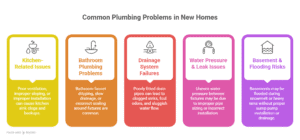
Kitchen-Related Issues
Improper ventilation, poor pipe slope, or incorrect installation can lead to recurring kitchen sink clogs and backups. Grease buildup and food waste can worsen these problems.
Bathroom Plumbing Problems
Common issues include dripping faucets, slow drainage, and poor sealing. Over time, these can lead to water waste and hidden leaks.
Drainage System Failures
Improperly installed drain pipes can cause frequent clogs, unpleasant odors, and slow water flow. Severe cases may require major repairs or partial replacements.
Water Pressure & Leak Issues
Uneven water pressure is often caused by incorrect pipe sizing or installation errors, leading to leaks and costly repairs.
Basement & Flooding Risks
Without proper drainage or sump pump installation, basements are vulnerable to flooding during heavy rain or snowmelt.
These issues highlight the importance of proper inspections, testing, and professional installation during construction.
7. Inspections, Permits & Canadian Compliance
Plumbing systems in Canada must meet strict regulations for safety and efficiency.
Before completing your project:
- Secure required permits
- Schedule inspections at key stages
- Conduct pressure and leak testing
Working with licensed professionals ensures compliance and avoids costly penalties.
8. Understanding Plumbing Costs
The total cost of new construction plumbing depends on several factors.
These include:
- Home size and layout
- Number of fixtures and bathrooms
- Material quality
- Advanced systems like sump pumps and water softeners
Labor complexity, accessibility, and local regulations also influence overall costs.
Cutting corners may save upfront costs but often leads to expensive repairs later.
Working with BOS Plumbing and Drains ensures transparent pricing, expert recommendations, and long-lasting solutions.
9. Residential vs Commercial Plumbing Considerations
Understanding the difference between residential and commercial plumbing helps in planning your system effectively.
1. Residential Plumbing
Residential systems are designed for everyday household use with moderate water demand.
- Kitchen, bathroom, and laundry systems
- Moderate pressure and usage
- Simpler layouts and smaller pipes
Proper design is still essential to prevent leaks, clogs, and inefficiencies.
2. Commercial Plumbing Service
A commercial plumbing service is designed for high-demand environments like offices, restaurants, and multi-unit buildings.
- High-capacity pipes and fixtures
- Advanced drainage systems
- Durability for continuous usage
Issues in commercial or business systems can escalate quickly, often requiring urgent assistance from an emergency plumber.
3. Industrial Plumbing
Industrial plumbing is a highly specialized system used in factories and large facilities. These systems are designed to handle:
- High-pressure operations
- Specialized waste management
- Complex piping networks
Choosing the right plumbing strategy ensures efficiency, compliance, and long-term durability. Hiring experienced professionals like BOS Plumbing and Drains ensures your system—whether residential or commercial—is installed correctly and built to handle real-world demands.
Final Thoughts
A well-planned new construction plumbing system is the foundation of a safe and comfortable home. Every stage—from planning and rough-in to fixture installation and inspection—plays a crucial role in long-term performance.
Investing in professional plumbing installation helps homeowners avoid costly issues such as clogged sinks, drain repairs, and emergency breakdowns. Whether you are a builder or a homeowner, working with experienced professionals ensures your plumbing system is efficient, code-compliant, and built to withstand Canadian conditions year-round.
FAQs
1. How much does new construction plumbing cost in Canada?
The plumbing cost for a new build typically ranges from $10,000 to $25,000 for a single-family home, depending on the number of bathrooms and the complexity of the plumbing layout.
2. What is the most common plumbing mistake in new builds?
Poorly installed drain pipes and lack of proper venting are the most common issues. These can lead to clogged sinks, slow drainage, and kitchen backups. Hiring an experienced plumber for proper inspection is the best prevention.
3. Why is a backwater valve important in the GTA?
Backwater valves are essential in many Canadian cities. They allow wastewater to flow out while preventing sewage from backing into your home during heavy storms or sewer overload.
4. How do I find reliable residential plumbers near me?
Look for plumbing companies with proven experience and strong local expertise.
BOS Plumbing and Drains has over 20 years of experience serving the GTA, offering both new construction plumbing and repair services.