
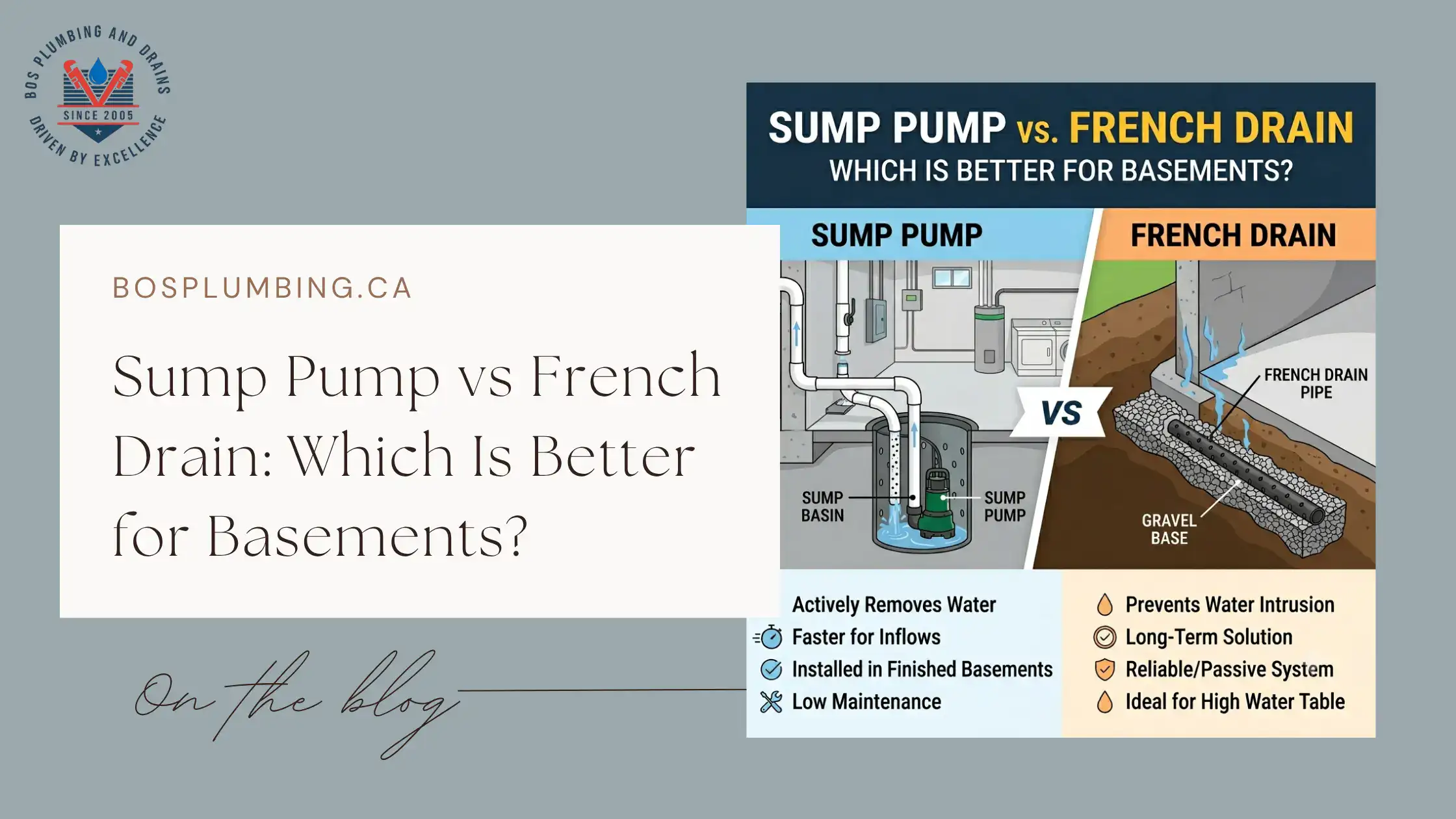
It really relies on a number of factors, including drainage of your property, soil type, foundation design, and how much water enters your basement. In this guide, we’ll discuss the differences between a sump pump and a french drain, how they work, and the pros and cons of each. We’ll also help you understand which drainage system is best for your home.
Understanding Basement Water Problems in Canada
Many homes throughout the Greater Toronto Area experience water-related issues due to:
- Heavy rainfall
- Spring thaw and snowmelt
- Poor yard grading
- High water tables
- Aging drainage systems
- Foundation cracks
- Clogged weeping tiles
- Drain pipe clogged conditions
Without proper drainage protection, homeowners can face serious basement flooding repair expenses and structural damage.
This is why waterproofing professionals often recommend installing either a basement sump pump, a french drain system, or both.
What A Sump Pump Actually Does?
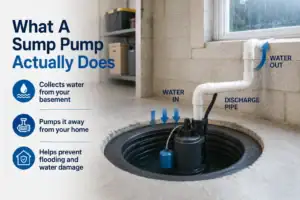
A sump pump is located in a sump pit, a hole that is dug in the lowest point of your basement floor. The water will trickle up through the ground and into that hole, and as soon as the pump reaches it, it turns on, and spits it out into a discharge pipe, away from your foundation.
There are a couple of types of sump pumps to be familiar with:
The pedestal pumps are located on top of the pit. They are less cumbersome to work with and have a longer lifespan, but they make more noise.
The submersible pumps are located in the pit and are quieter. They are the more popular option for already completed or unfinished basements.
When the power goes down, your battery backup unit should come on (as it does during Ontario’s spring storms at the worst possible time!)
Putting in a sump pump will generally include breaking the concrete floor, digging the sump pit, laying an outlet pipe to the surface and making electrical connections. Most of the time, it is not possible to sump pump installation yourself. It must be done by a licensed professional plumbers service and is only permitted in a lot of municipalities in Ontario.
What A French Drain Actually Does?

A french drain is a trench that’s filled with gravel and a perforated pipe to channel water that is flowing through the ground and away from your foundation to a location where it will be safe.
There are 2 types: interior and exterior.
An exterior French drain system is installed around your home, outside the foundation. It intercepts water before it even gets to your walls. Effective, but costly to install and requires landscaping, driveway or deck to be ripped up.
The French drain installation inside the foundation around the perimeter of your basement floor is called an interior french drain. This channel collects water that has seeped through the walls and then channels it to a sump pit which is connected to a sump pump to pump the water out. Since exterior systems can change over the years, and interior systems do not cause as much disruption, they are a better solution in Canadian climates where the ground freezes.
The concept of a french trench drain is the same but is applied to the yard surface, where puddling occurs around the house.
Sump Pump vs French Drain: Key Differences
| Feature | Sump Pump | French Drain |
| Purpose | Removes collected water | Redirects groundwater |
| Operation | Mechanical | Gravity-based |
| Power Required | Yes | No |
| Maintenance | Regular | Minimal |
| Installation Complexity | Moderate | Moderate to High |
| Flood Protection | Excellent | Excellent |
| Foundation Protection | Good | Excellent |
| Works During Power Outage | No (unless battery backup) | Yes |
Both systems are effective, but they solve water problems differently.
Sump Pump Vs French Drain: The Real Differences
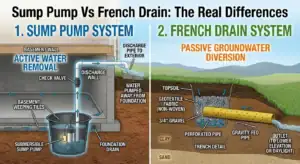
These are two different systems that address different problems; they are frequently used concurrently.
A basement sump pump in the will get rid of water that has already entered the basement or is rising from the ground. Before it reaches your foundation or after it enters your wall, it is controlled by a french drain. Many times, the interior french drain system will directly discharge to the sump pit, and the sump/pump combination is used for the last removal.
Let’s look at it practically:
You should get basement sump pump installation if your basement is flooding due to the water table rising during snow melt. An interior french drain in conjunction with a sump pump is probably what the solution is when there is water running into the foundation wall and water pooling in the basement. Before it ever touches your foundation, an exterior french drain takes care of any surface water from your yard that flows towards your home.
Can You Install Both a Sump Pump and French Drain?
Absolutely.
In fact, many waterproofing contractors install a french drain system that feeds collected water directly into a sump pit, where the sump pump removes it from the property.
This combination offers:
- Superior flood prevention
- Better foundation protection
- Reduced hydrostatic pressure
- Increased property value
- Long-term waterproofing performance
For homes in Mississauga, Oakville, Hamilton, Brampton, Milton, Niagara, Cambridge, and Etobicoke, combining both systems often provides the best results.
Signs Your Sump Pump Needs Attention Now
A few things worth checking:
When your sump pump is running all the time, cycles on and off without a lot of rain, makes grinding or rattling noises, or has standing water in it and doesn’t kick on, then sump pump repair is required.
Sump pump maintenance is due this season if the pump is over 7-10 years old and has not had any maintenance. The spring season is the worst time to find a problem, since it’s the time you’ll want the pump to be in use.
This type of sump pump system can be outfitted with a water alarm (a simple float sensor that alerts you when the water reaches a set level) for less than $50 and has helped save many Ontario basements without anyone knowing.
Don’t Overlook Your Backflow Protection
If you have it in your basement flooding, then using a sump pump and a french drain may not be sufficient. In older homes in the GTA, they may be susceptible to sewer backup because during periods of intense rain, the municipal storm or sanitary sewer pipes may overflow leading the sewage back through the floor drains and toilets.
The sewer backup valve, also known as a backflow valve basement, or backflow valve sewer protection, is located on the main drain line and is equipped with a mechanism that will shut it off when reverse flow is detected. Mississauga and Brampton are among the many Ontario municipalities that have rebate programs for offsetting installation costs.
You will be all too familiar with the floors you are assigned to clean if you have ever had to clean up in the basement after a sewer backup. Basement flood clean up can cost between $10,000 and $40,000 depending on the damage done to the basement. The cost of a backflow valve fitted before is much less.
When Your Drain System Needs Attention Too
Once it’s in place a sump pump works to remove the water, however if the lines are clogged or damaged the entire system is required to work harder to remove the water. When a drain pipe clogged predicament slows down your system, drain snaking is frequently the initial measure taken. When it’s time for a drain repair or plumbing repair service, hire a licensed plumber to clear years of accumulated debris from inside the waterproofing system and ensure that it continues to operate as intended.
Drain snaking is also the first thing to try when an interior french drain channel starts backing up. Silt, root intrusion, and debris collect in these systems over years, so periodic cleaning is part of owning them..
Can You Install French Drain Or Sump Pump Yourself?
Realistically, a french drain in the yard is a project that can be accomplished by a handy homeowner who rents a trencher and works on it on the weekend. If it has to do with interior systems and anything that comes into contact with your foundation and sump pit, it is another story.
Basement sump pump installation in Ontario entails a need for breaking concrete and dealing with electrical connections. In the case of a permit (which you should obtain) the work must conform to the Ontario Building Code. Those needs will be known to a licensed sump pump plumber or waterproofing company.
However, for commercial plumbing, or multi-unit residential, this level of plumbing and repair work is always licensed work, regardless of the circumstances.
If any of the above becomes an issue during the project or if your basement begins to flood during the middle of the work, contact your local emergency plumber right away.
Sump Pump vs French Drain: Which Option Is Right for Your Home?
Choosing between a sump pump and a french drain depends on how water is entering your property. While both systems help prevent basement flooding, they solve different problems.
| Situation | Recommended Solution |
| High groundwater levels beneath the home | Sump Pump |
| Water entering through foundation walls | French Drain |
| Frequent flooding during spring thaw | Sump Pump + French Drain |
| Water pooling around the foundation | French Drain |
| Finished basement requiring maximum protection | Both Systems |
| Older GTA home with recurring moisture issues | Both Systems |
Typically, a basement sump pump in the is preferable when the water level in the ground is above the foundation. The French drain system works best if there is water flowing through the surrounding soil and exerting a pressure on the walls of a foundation.
Waterproofing professionals in Mississauga, Oakville, Hamilton, Brampton, Milton, Niagara, Cambridge and Etobicoke frequently suggest adding a sump pump with french drain installation for many homes. This will capture water before it goes into the basement and take it off the premises safely.
When you are not sure which solution is appropriate to your house, having a professional inspection can locate the root cause of the water issue, and suggest the best solution.
Common Signs You Need a Sump Pump or French Drain
Many homeowners don’t realize they have a drainage problem until water starts entering the basement. Knowing the warning signs early can help prevent expensive basement flooding repair and foundation damage.
Signs You May Need a Sump Pump
A sump pump installation may be the right solution if you notice:
- Water entering through basement floor cracks
- Damp basement floors after heavy rain
- Standing water near the foundation footing
- Frequent flooding during spring snowmelt
- A constantly wet crawl space
- Rising groundwater levels around the property
Installing a basement sump pump can help remove excess groundwater before it causes serious damage.
Signs You May Need a French Drain
A french drain installation may be recommended if you notice:
- Water stains on basement walls
- Persistent moisture along foundation walls
- Pooling water around the exterior of your home
- Musty odours in the basement
- Visible foundation cracks
- Water seeping where the wall meets the floor
A properly designed french drain system helps redirect groundwater away from your foundation and reduce hydrostatic pressure.
Signs You May Need Both Systems
Some homes benefit from both a sump pump and a french drain. Consider a combined solution if you experience:
- Recurring basement flooding
- Water entering through both floors and walls
- A high water table combined with poor drainage
- Previous flood damage or mould issues
- Ongoing waterproofing problems despite past repairs
When these symptoms are ignored, homeowners often face costly repairs, including foundation work, mould remediation, and basement flood clean up services.
Why GTA Homeowners Trust BOS Plumbing and Drains
For more than 20 years, BOS Plumbing and Drains has helped homeowners and businesses protect their properties from water damage and plumbing emergencies.
Serving Mississauga, Oakville, Hamilton, Milton, Niagara, Cambridge, Brampton, and Etobicoke, the team provides reliable solutions for residential and commercial properties across the GTA.
Their services include:
- Sump pump installation
- Basement sump pump installation
- Sump pump repair
- Sump pump replacement
- Drain repair
- Drain snaking
- Plumbing repair
- Plumbing and repair
- Waterproofing solutions
- Sewer and drain services
- Emergency plumbing assistance
- Backwater valve installations
- General plumbers service
- Residential and commercial plumbing
Whether you’re dealing with emergency basement flooding, planning preventive upgrades, or need expert advice on waterproofing solutions, BOS Plumbing and Drains offers experienced, professional support.